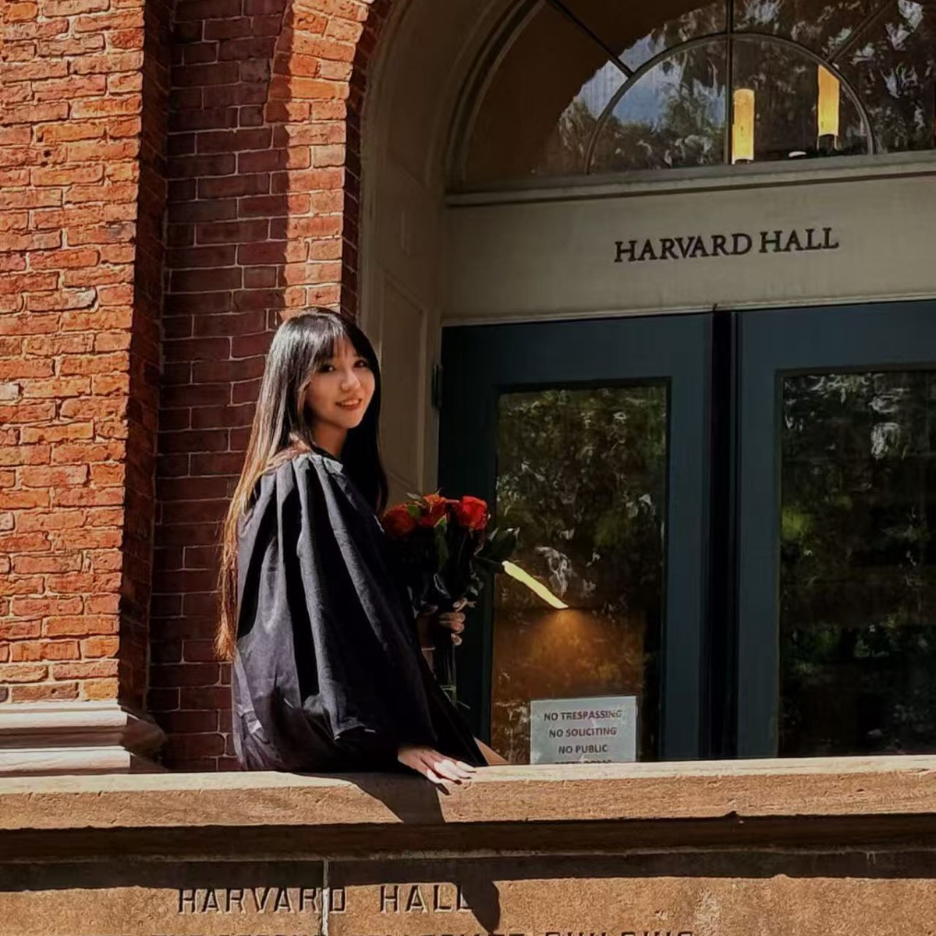
In this reflection, Chelsea Liu shares how her journey from marketing and entrepreneurship to dance education, language teaching, and curriculum design shaped her understanding of what makes learning meaningful. Drawing on her experiences as an English and drama educator in China, Chelsea reflects on how her time at the Harvard Graduate School of Education (HGSE) helped her move beyond questions of how students learn to a deeper exploration of how educators intentionally design learning experiences that inspire purpose and growth. Chelsea argues that the most powerful learning happens when students understand not only what they are learning, but why it matters.
Chelsea Liu (she/her)

When the curtain rose on our student production of Hamilton in Wuhan, I stood backstage watching a group of teenagers step into the spotlight. Some had spent months memorizing lines in a language that was not their first. Others had once been reluctant to speak in front of their classmates. Yet on that evening, they sang, acted, and told stories with a confidence that surprised even themselves.

What moved me most was not the performance itself. It was the transformation that had happened along the way.
As an English and drama teacher, I had watched these students struggle, grow, collaborate, and ultimately take ownership of something larger than a test score. For months, they had worked toward a shared purpose: bringing a story to life on stage. Standing backstage that evening, I found myself reflecting on a question that had followed me throughout my career: Where does meaningful learning actually happen?
My search for that answer has taken me through several different worlds. Before becoming an educator, I worked in business. Despite the stability of that career, I felt increasingly drawn to work that involved creativity, human connection, and personal growth. Eventually, I left the corporate world and became a dance teacher.
Teaching dance taught me something that traditional schooling often overlooks. People do not learn only through instruction. They learn through experience, practice, community, and purpose. Students who struggled with confidence often found their voice through performance. Those who doubted themselves developed resilience through repeated effort. Long before I encountered educational theories, I was witnessing learning in its most human form.

Years later, when I transitioned into international education and began teaching English and drama in China, I saw the same pattern emerge. Some of my students learned more deeply while preparing for a performance than they did while preparing for an exam. The difference was not ability; it was purpose. In drama, students understood why they were learning. Every rehearsal, every discussion, and every challenge contributed to something real.
These experiences eventually brought me to the Harvard Graduate School of Education.
At HGSE, I found myself expanding the questions I had been asking throughout my career. I was no longer interested only in how students learn. I became increasingly interested in how educators intentionally design learning experiences that make learning meaningful.

One of the courses that shaped my thinking most was Technology-Based Language Teaching and Learning. As a language educator, I was fascinated by discussions around relevance, authentic communication, multimodal learning, and the expansion of classroom boundaries. The course challenged me to think beyond traditional models of language instruction and consider how technology, authentic texts, and diverse forms of input can create richer learning experiences. It reinforced my belief that language learning should not be confined to textbooks and grammar exercises. Instead, it should help students engage with ideas, communicate with others, and participate meaningfully in the world around them.

Another influential course was Adolescent Literacy, which deepened my understanding of multilingual learners and the challenges they face when developing academic language. The course introduced research-based approaches to scaffolding, intervention, and literacy development while reminding me that language learning is ultimately about access. When students gain confidence with academic language, they gain access to opportunities, communities, and futures that might otherwise feel out of reach.
Beyond the classroom, one of the most meaningful experiences during my time at Harvard was helping organize the China Education Symposium. The symposium brought together educators, researchers, policymakers, and school leaders from China and the United States to exchange ideas about the future of education. It was an opportunity that I could not have imagined before arriving at HGSE.

During the symposium, I was particularly inspired by conversations surrounding David Perkins’ work in Future Wise and his question: What is worth learning for the future?
The question stayed with me long after the symposium ended. Too often, students spend years studying without fully understanding what they are studying and why it matters. As educators, we carefully design curriculum and assessments, yet we do not always help students see the larger purpose behind their learning. The more I reflected on this idea, the more I recognized its connection to my own experiences as a drama teacher. Students preparing for a production rarely ask why they need to learn something, since the purpose is clear. The learning serves a meaningful goal beyond the classroom.
Shortly before graduation, I was invited to support curriculum development and educational innovation at an international school in Wuhan. Returning to practice immediately after a year at HGSE has been both exciting and grounding. One of the projects I am currently leading is the design of a summer learning experience that incorporates many of the principles I explored at Harvard, including authentic learning tasks, student agency, multimodal learning, collaboration, and meaningful language use.
The experience has reminded me that educational change happens one learning experience at a time. Great ideas matter, but what matters even more is whether students can experience those ideas in ways that feel relevant, engaging, and purposeful.
As I write this, I am helping schools think differently about curriculum and learning. At the same time, I find myself looking toward my next chapter. My plan is to return to Boston and continue exploring opportunities in learning design, where I hope to create educational experiences that reach learners at scale.
Looking back at that Hamilton stage in Wuhan, I realize that the question that first brought me to HGSE is still the question that guides me today. Not simply how students learn, but how we can design experiences that make learning matter.
Leave a Reply