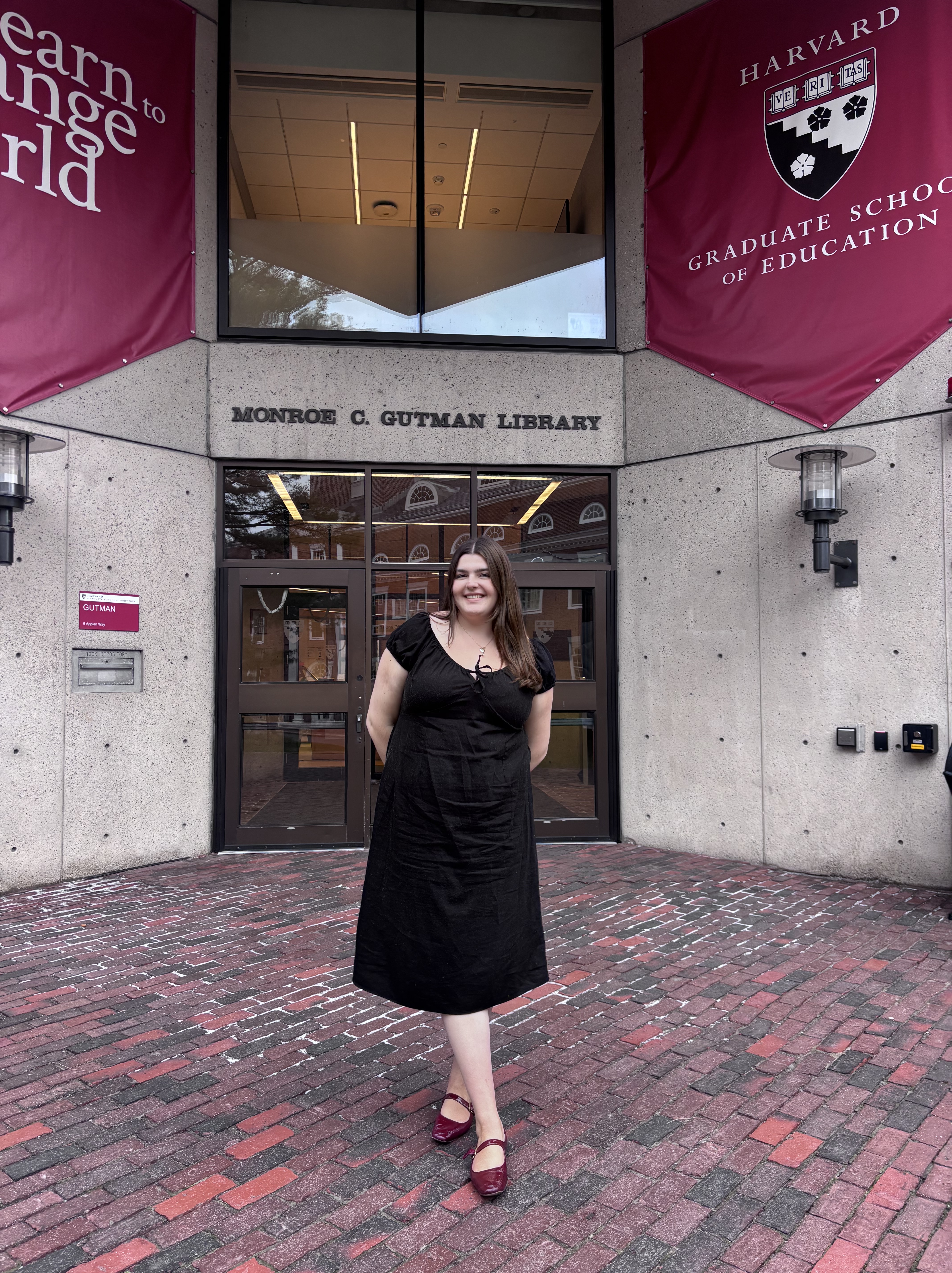
In this reflection, Olivia Oestreicher shares the post-graduation opportunities that emerged directly from classroom experiences at the Harvard Graduate School of Education (HGSE). Through coursework, guest speakers, and class assignments, she connected with leaders and institutions whose missions aligned with her interests in higher education, ultimately leading to roles with The HEA Group and Hollins University. Olivia explores the value of intentional networking and taking initiative after class while reflecting on how HGSE’s access to active leaders in education can create unexpected professional opportunities.
Olivia Oestreicher (she/her)

Opening Acknowledgement
This academic year, I have had the privilege of highlighting student voices on this blog as a Graduate Assistant for HGSE Admissions & Aid. While I have intentionally not written about myself this year, several friends and coworkers encouraged me to share this story because they felt it might be helpful to future HGSE students navigating their own academic and professional journeys.
I want to begin by acknowledging that each HGSE student’s experience is unique. No single story reflects the realities of today’s challenging job market. Across higher education and the broader education sector, institutions are navigating hiring freezes, budget cuts, restructuring, and significant uncertainty. Incredibly qualified students and professionals are struggling to secure opportunities right now, regardless of their backgrounds, experiences, or credentials. I can only speak to my own experiences and the specific circumstances that shaped them.
My story reflects a combination of timing, mentorship, prior professional experience, career goals, alignment between my interests and emerging opportunities, and, quite honestly, a significant amount of luck. There is no universal formula for replicating these outcomes. Rather, this reflection is simply meant to highlight how syllabi, classroom conversations, guest speakers, assignments, and intellectual curiosity can sometimes open unexpected doors.
—————————-
The HEA Group
As an ELOE student with a concentration in Higher Education, I took Professor Purcell’s A701: Creating the Future of American Postsecondary Education, which explored the history, present realities, and future challenges facing American higher education. We discussed declining public trust in colleges and universities, demographic shifts, institutional closures, affordability concerns, governance issues, the growing national conversation about whether college is “worth it,” and much more. One class session focused specifically on the return on investment of higher education, which immediately captured my attention, as I have become increasingly interested in how Americans view its value, especially as someone pursuing a career in admissions.
During that class session, Prof. Purcell invited Michael Itzkowitz, the former Director of the College Scorecard under the Obama Administration and President of The HEA Group, to speak with our class.
Michael discussed his work leading the College Scorecard initiative, which was one of the first major federal efforts to make data on higher education outcomes publicly accessible and understandable to students and families. He also spoke about The HEA Group’s research measuring economic mobility, earnings outcomes, and the long-term value students receive from college programs across the country.
Given my academic and professional background in communications and political science, I’m concerned about how this information reaches everyday students and families. I became especially interested in the challenge of translating research and data into language, graphics, and messaging that ordinary students and families could actually understand and use. So I decided to send Michael a cold email.
I reached out to him after class, introduced myself, and shared some ideas on public-facing communication strategies for The HEA Group’s work, drawing on my academic and professional experiences. I didn’t expect much beyond a brief response. Instead, he responded quickly and agreed to meet over Zoom.
During that conversation, I learned more about his background, his time at the U.S. Department of Education, and The HEA Group’s mission. We talked about communications strategy, public engagement, and the challenge of making complex higher education policy issues understandable to broader audiences. I also shared ideas for improving the organization’s social media and digital storytelling strategy.
This semester, I became The HEA Group’s first Graduate Fellow. Even more excitingly, I’ll continue working with The HEA Group after graduation, part-time as a Project Manager, while also helping to launch and manage a new Fellowship Program for future HGSE students. What began as a classroom discussion and a cold email turned into a professional opportunity that did not exist before that conversation.
—————————-
Hollins University
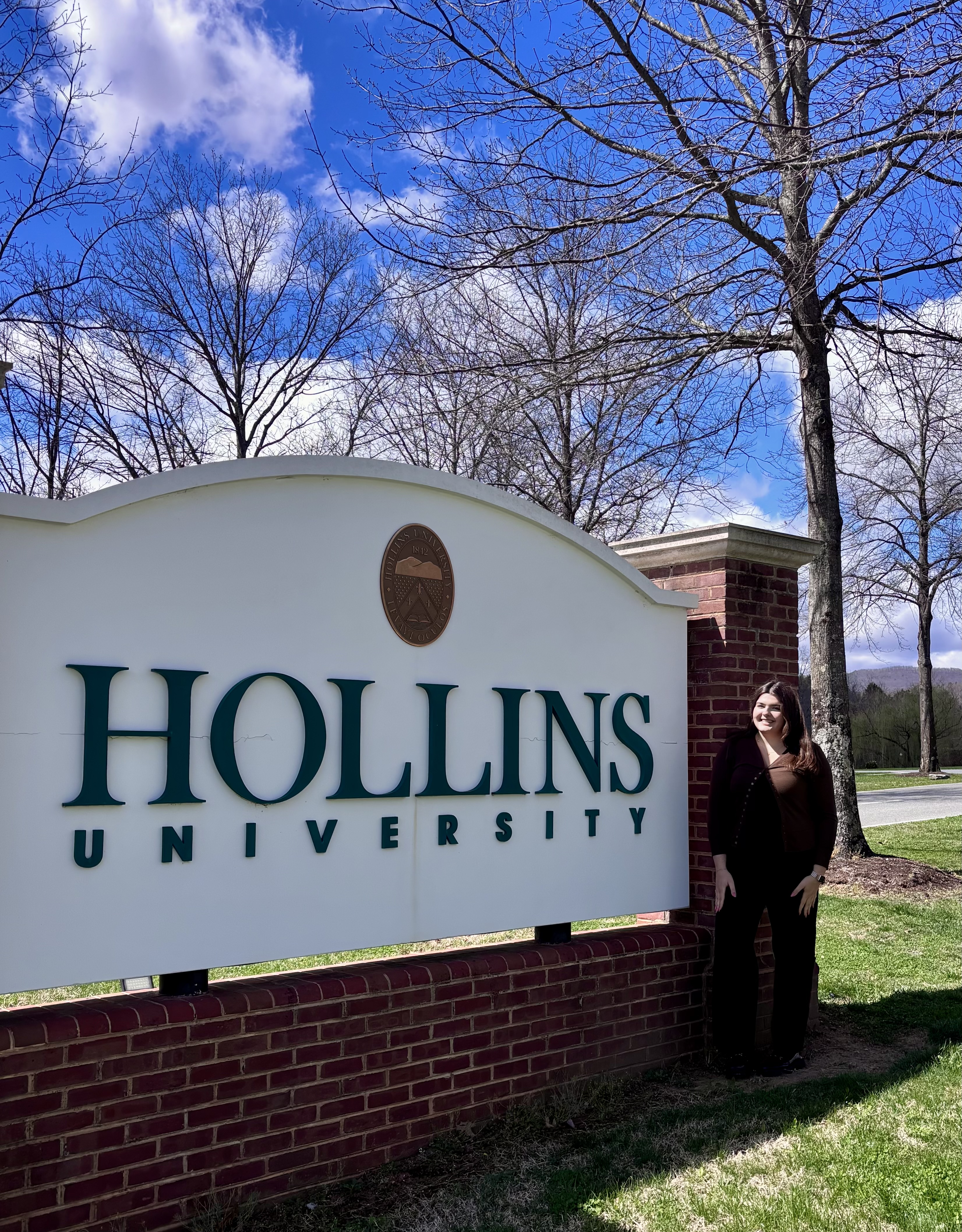
The full-time role I’m starting after graduation also came directly from an HGSE class.
As I began my full-time job search in January, I knew I wanted to pursue admissions positions because I had fallen in love with admissions work through my Graduate Assistant role at HGSE. I loved telling the story of an institution, hearing and reading students’ stories, dreams, and aspirations, and helping curate a community of diverse and dedicated learners. I also knew I wanted to work at an institution whose mission aligned closely with my values. I was especially drawn to institutions focused on equity, belonging, and student-centered leadership.
I had also developed a growing interest in working at a women’s college. Long before HGSE, what initially sparked my interest in studying and working in higher education (and what I wrote my HGSE Statement of Purpose about) was my experience as a student during the merger between Northeastern University and Mills College, a women’s college in Oakland, California. Watching questions of institutional identity, governance, legacy, and student experience unfold during that process deeply shaped how I think about higher education. Because of that experience, I became especially interested in the future of women’s colleges and how institutions preserve mission and identity during periods of change.
This spring, I took Professor Escalera’s A770: Higher Education Leadership, Administration, and Governance class. The course examined leadership in higher education through a research-based, practical, and equity-centered lens. We discussed and learned about research related to governance structures, university leadership, media relations, stakeholder management, institutional politics, academic freedom, organizational decision-making, and much more.
One week early into the semester, our class focused specifically on equity-centered presidential leadership. For a pre-class assignment, I was randomly assigned to listen to a podcast episode featuring Mary Dana Hinton, President of Hollins University, a small liberal arts women’s college in Roanoke, Virginia.
President Hinton spoke about her upbringing, her leadership philosophy of “leading from the margins,” and Hollins’ commitment to supporting its students through initiatives like the HOPE Scholars program. I was immediately drawn to both her leadership style and the institution itself. I found myself wondering how I had never heard of Hollins University before.
After class, I looked up Hollins online. I remember being struck by the beauty of the campus, the school’s history, and its mission-centered focus on women’s education. It genuinely felt like the kind of institution where I could see myself contributing meaningfully and be proud to work for.
I clicked on the employment page. And there it was: Assistant Director of Admissions.
I applied that same night.
In my application materials, I explained my connection to women’s colleges, my interest in higher education leadership and admissions, my work in admissions communications for HGSE, and that I had discovered Hollins through my HGSE coursework.
Three interviews later, I accepted an offer in March to join Hollins University as an Assistant Director of Admissions beginning this July.
———————–
My Analysis & Advice
I fully recognize that there is no universal formula for finding a job, and every student’s path looks different. But having two major professional opportunities emerge directly from classroom experiences in a one-year graduate program also does not feel like a coincidence. Out of the two roles I landed, one literally did not exist before I initiated a casual conversation, and the other is a position and institution I very likely would never have discovered had it not been for a course assignment.
In a program as short and intensive as HGSE’s Ed.M., it is important to be thoughtful and strategic about the classes you choose, the professors you learn from, and the topics you immerse yourself in. The guest speakers invited into our classrooms, the institutions featured in case studies, the leaders our professors assign us to study, and the organizations highlighted throughout our syllabi represent some of the most innovative and influential work happening across the field of education. These are not random examples. They are intentionally and meticulously curated by professors who are deeply respected scholars, practitioners, and leaders in their fields and who have built credibility and relationships with other leaders across the sector.
What also makes this experience unique is that, unlike many academic environments where students primarily study historical figures or theories disconnected from present-day practice, much of our coursework at HGSE centers around people who are actively shaping the field right now. Yes, we learn about the history of education and the foundational leaders who shaped higher education and policy over time, but many of the researchers, practitioners, university leaders, policymakers, and founders we study are very real people currently doing this work in the world and are often more than happy to share their wisdom and networks with HGSE students.
It is important to recognize that Harvard can provide extraordinary exposure and access, but it is ultimately up to each individual student to advocate for themselves and take initiative once the class or event is over. Simply attending a lecture or hearing a guest speaker will not translate into opportunity. Outcomes are produced from what happens afterward: asking follow-up questions, sending an email, continuing the conversation, doing additional research, or finding other ways to stay engaged with ideas and people who genuinely resonate with you.
I also want to be clear that I am not suggesting students should follow up with every guest speaker simply to expand their network or collect LinkedIn connections. People can tell when networking is transactional or superficial. Before reaching out to someone, do your research. Think deeply about whether their work aligns with your values, your goals, and the kind of impact you hope to make in education. Ask yourself not, “Can this person help me get a job?” but, “Do I genuinely admire this work, and can I authentically see myself contributing to it?” Also, ask yourself whether you have a skill, perspective, or area of experience that could meaningfully support or add to their work.
On a random Tuesday at HGSE, you can walk into a classroom or campus event and hear directly from individuals who are shaping local, state, national, and international education policy and practice, leading major institutions, founding organizations, conducting groundbreaking research, and driving change across the field. Not to mention that many HGSE students themselves already fall into these categories. Many of these individuals travel across the country, and sometimes across the world, simply to spend an hour engaging with the HGSE community.
What surprised me most about my HGSE experience was not just the level of access itself, but how normalized and casual it becomes within the student experience. Over time, it starts to feel entirely ordinary to hear from university presidents, nationally recognized scholars, policymakers, nonprofit founders, or senior government officials in the middle of a class discussion. Yet when you step back and think about it, that level of direct access to leaders across the education sector is incredibly rare and difficult to replicate anywhere else. Often, all you have to do is show up to class, listen carefully, ask thoughtful questions, and (maybe) follow up afterward.
Since starting Foundations in June, I have probably interacted with at least 100 speakers through classes and events across HGSE and the broader Harvard community. Those classroom conversations and guest speaker sessions can open doors in ways that traditional job applications often cannot. “The world comes to Harvard,” and HGSE students have a unique opportunity to learn directly from the people shaping the future of education and potentially make those individuals part of their lifelong personal and professional network.
So send the email! Ask the follow-up question. Reach out to the speaker whose work genuinely inspired you. Do additional research on the institution mentioned in class. Treat your coursework as a window into the field you hope to enter.
You will not always get a response. But sometimes you will! And sometimes, one conversation can completely reshape your life. It did for me, and I am very grateful.