In this piece, Catherine Togba Woyee reflects on her journey to the Harvard Graduate School of Education, shaped by her experiences as a refugee, her upbringing in Liberia, and her commitment to expanding access to education for girls and underserved communities. She shares how education became an anchor as she navigated displacement and built a future for herself and her family, ultimately leading her to leadership and policy work across global contexts. She encourages prospective students to recognize the power of their own stories, trust that their lived experiences are assets, and understand that they already belong in spaces like HGSE as changemakers prepared to make a lasting impact.
Catherine Togba Woyee (she/her)
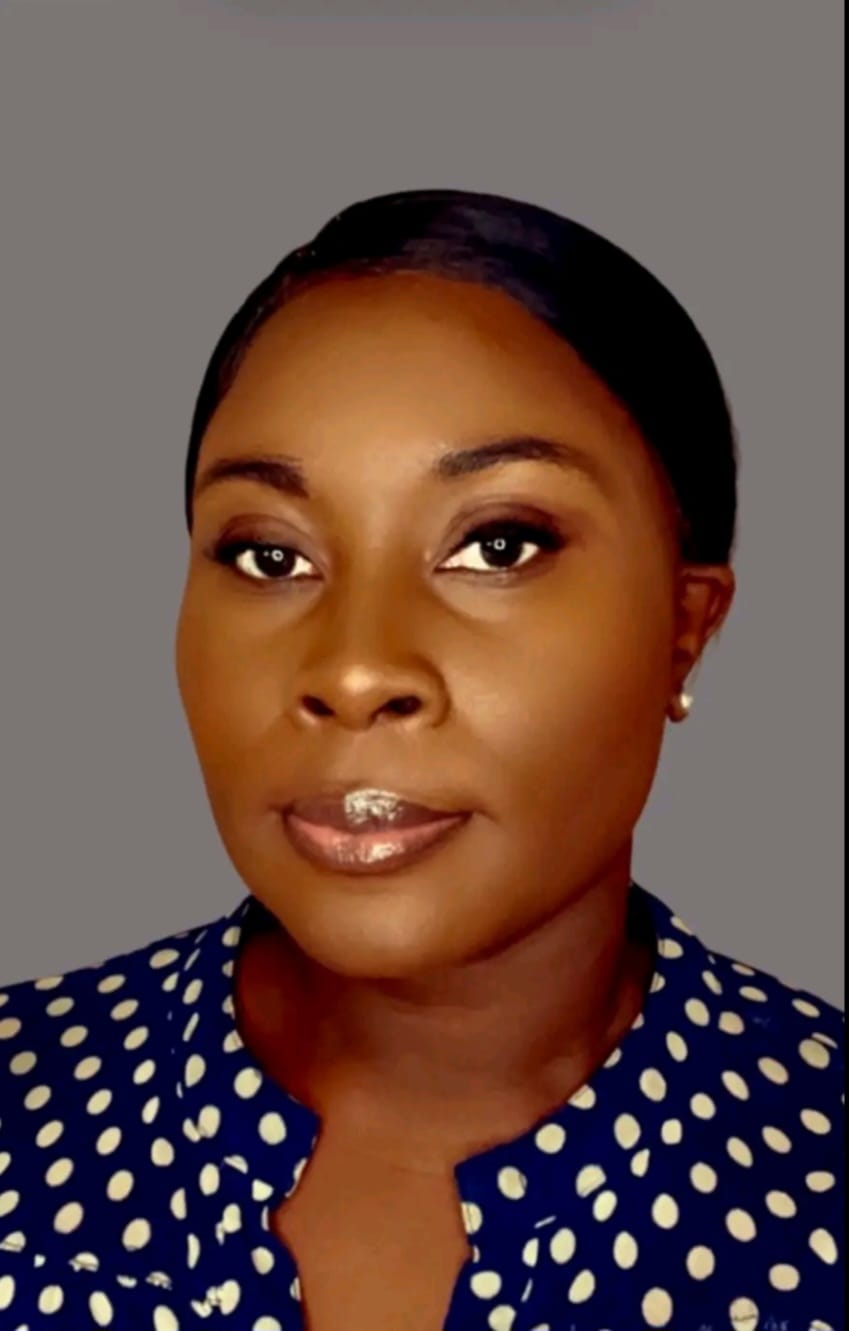
My name is Catherine Togba Woyee, and I am an Ed.M. candidate in International Education Policy and Management, Class of 2027. I earned my undergraduate degree from North Carolina Central University (NCCU), an HBCU that shaped my commitment to community, leadership, and access.
But long before Harvard, before Durham, before any classroom that gave me language for policy or pedagogy, I was a refugee.
My mother’s greatest dream was simple. She wanted to leave her village and reach the city for a decent education. That dream shaped everything. I have exceeded it in ways she could not have imagined, but I carry it with me every day. I will not stop until every girl in Liberia has the same opportunity to learn, grow, and lead.
I came to the United States as a teenager, navigating a system I did not fully understand. Education became my anchor. It was how I made sense of the world, how I found my voice, and how I built a future for myself and my children. Today, one of my children is a graduate of Princeton University. That is not just a personal milestone; it is proof of what access to education can do across generations.
Coming to Harvard was not just an academic achievement. It was a full circle moment that connected my past, my present, and the future I am committed to building.
At HGSE, I have found something I did not expect. I came to deepen my work in education policy, but I also found the language and research tools to articulate experiences I have carried for years. In classes, we examine global systems, funding structures, and how power operates in education, both in ways that expand opportunity and in ways that quietly restrict it. For many, these ideas remain theoretical. For me, they are lived realities that I have witnessed, experienced, and worked to change.
When we discuss girls’ education, I think about the girls in Liberia who are still waiting for a chance. When we study refugee education, I see my younger self sitting in a classroom, trying to keep up while carrying the weight of displacement. When we explore inclusive pedagogy, I think about students who learn differently but are often left behind because systems were not designed with them in mind.
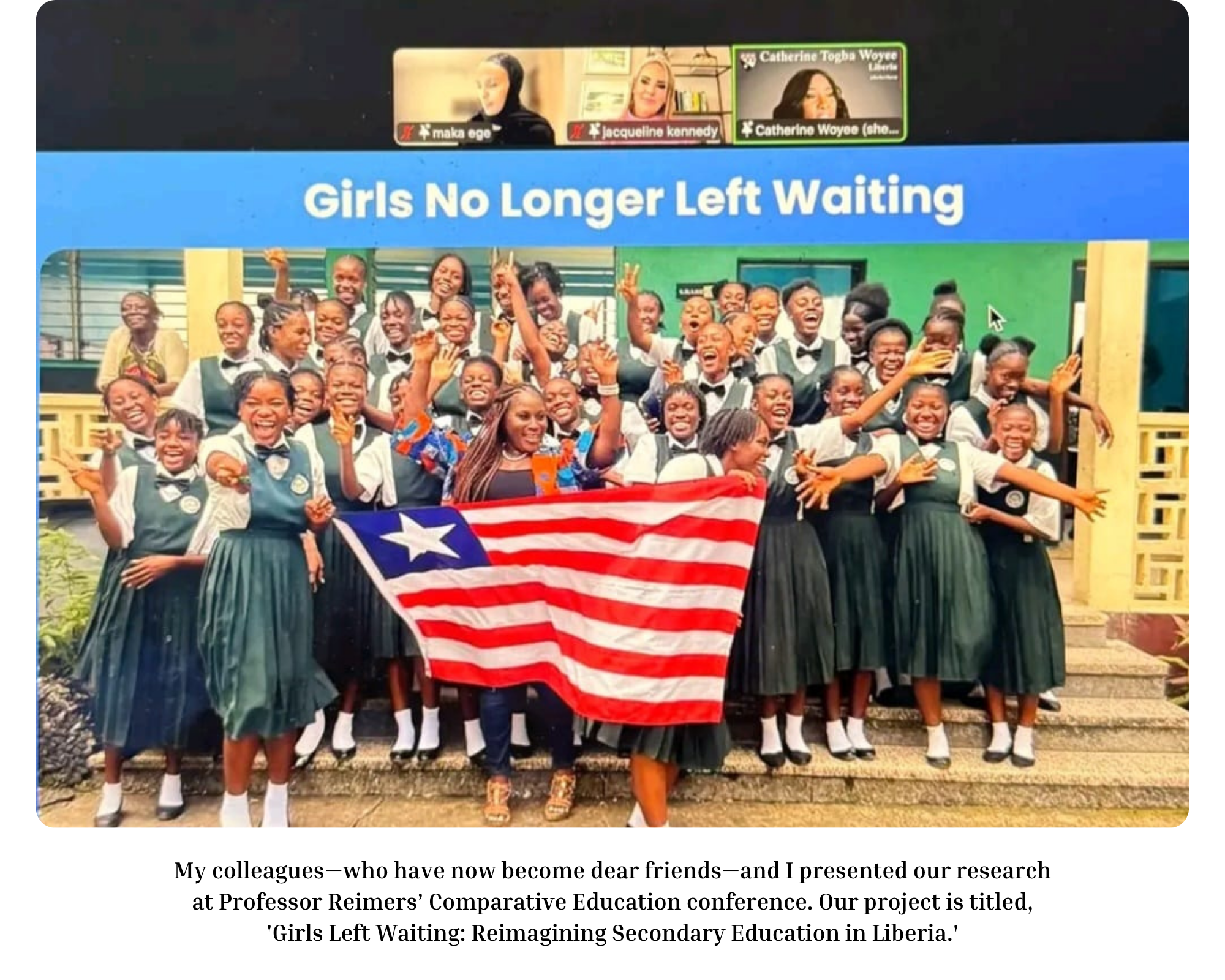
HGSE has pushed me to go deeper than I anticipated. It has challenged me to move beyond passion and into precision. I am learning how to translate lived experience into policy, how to ground advocacy in research, and how to design systems that not only respond to inequality but also actively dismantle it at scale.
Before Harvard, I returned to Liberia after more than thirty years away. What I saw confirmed what I already knew. The students were brilliant. The potential was there. But the system was not built to support them consistently or equitably.
There were few structures to identify or support students with different learning needs. Guidance counseling was limited. Policies around inclusion were weak or nonexistent. Students had stories, ideas, and talent, but no clear pathways to fully develop them or be recognized for their potential.
That reality shaped my work.
Through my organization, I have worked with schools to provide guidance counseling, support student assessments, and help educators understand how to meet diverse learning needs. I have also collaborated with the Ministry of Education to contribute to policies that better reflect the realities of students on the ground and prioritize inclusion, access, and long-term sustainability, while integrating AI tools, data systems, and digital learning platforms to expand access.
HGSE has strengthened that work. It has given me the tools to ask better questions, to analyze systems more critically, and to think about scale in ways that extend beyond individual schools into national and regional transformation.
But just as important as the academics is the community.
At Harvard, I have found a group of people who understand both the weight and the urgency of this work. As Online Co-Chair for HIVE and Vice President of Communications for the Harvard Black Graduate Students Alliance, I have had the opportunity to advocate for students, build community, and amplify the voices of those often overlooked in academic and professional spaces.
We come from different countries, different systems, and different lived experiences. But there is a shared understanding that we are here for a reason. We support each other, challenge each other, and celebrate each other’s growth. These are not just classmates. These are relationships that will continue far beyond this program.
One of the strongest perspectives I brought with me to HGSE is this. Our lived experiences matter. They are not barriers, they are assets. We belong in these spaces not because we are becoming something, but because of who we already are and the impact we are prepared to make.
Every classroom I enter, I carry my story with me. I carry my mother’s dream. I carry the responsibility to speak for those who are not in the room and to design systems that ensure they are not excluded in the future.
To anyone considering HGSE, here is my advice. You have already started the work. You have seen the problems up close. You have felt their impact. You have refused to ignore them or accept them as fixed realities.
This program is not looking for a finished version of you. It is looking for people who are already doing the work, thinking critically, and committed to meaningful, measurable change.
You belong here. Apply.
After HGSE, my work will continue with even greater urgency and clarity. I plan to pursue a Ph.D. in refugee education and girls’ learning while continuing to build future-ready learning spaces in Liberia. These will not just be classrooms, but models that can be replicated across West Africa, designed to center equity, innovation, and long-term impact.
This work is not theoretical for me.
It is personal.
And I am just getting started.
 HGSE Admissions Blog