In this piece, Sunita Swaraj reflects on her journey from decades of educational leadership in India to becoming an Ed.M. candidate in the Education Leadership, Organizations, and Entrepreneurship (ELOE) Program at the Harvard Graduate School of Education. Drawing on more than 30 years of experience as a teacher, school leader, and K–12 principal, Sunita explores how her practice-based background shaped a deep commitment to democratic learning, literacy, and whole-school transformation.
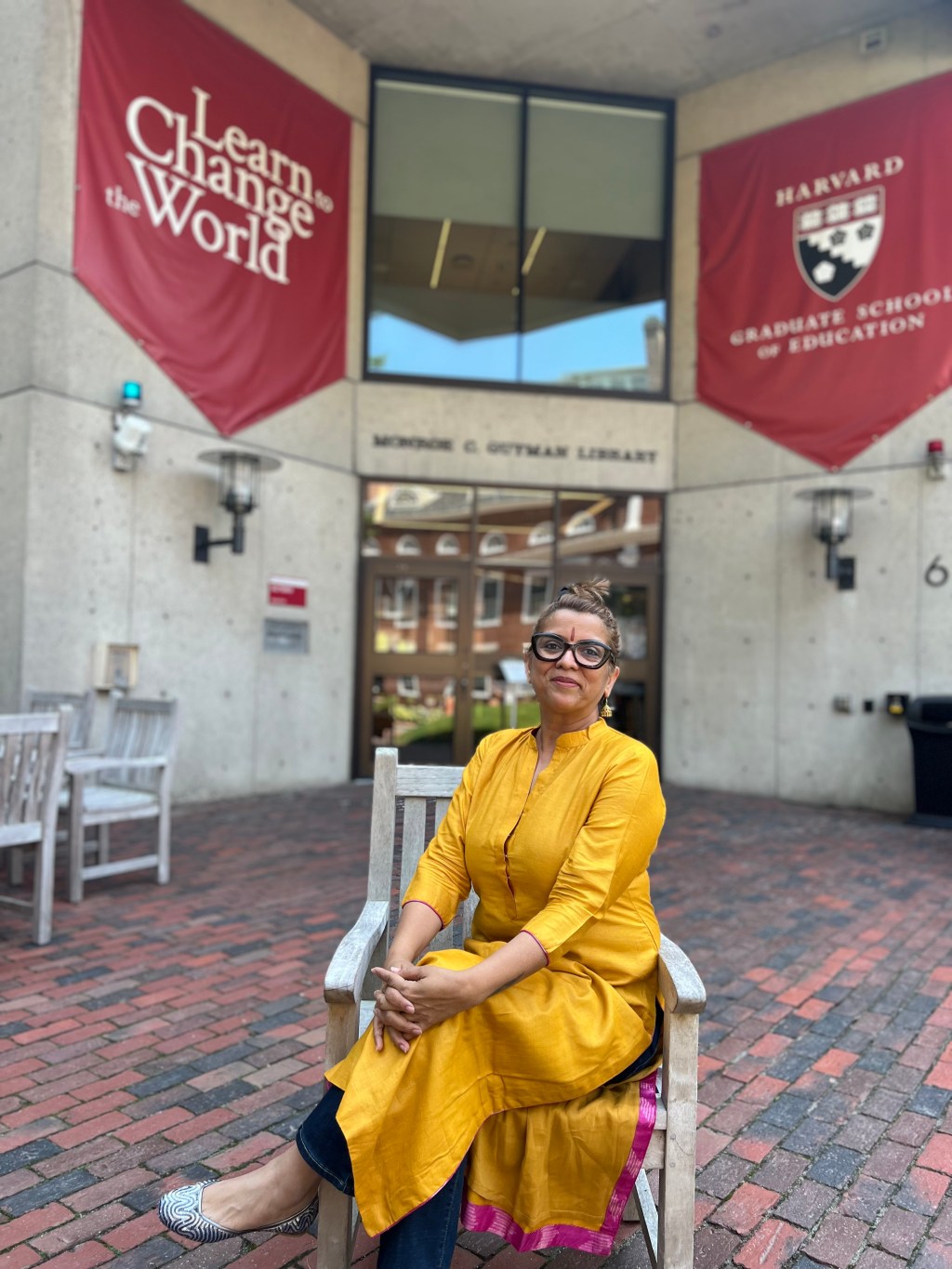
Sunita Swaraj (she/her)
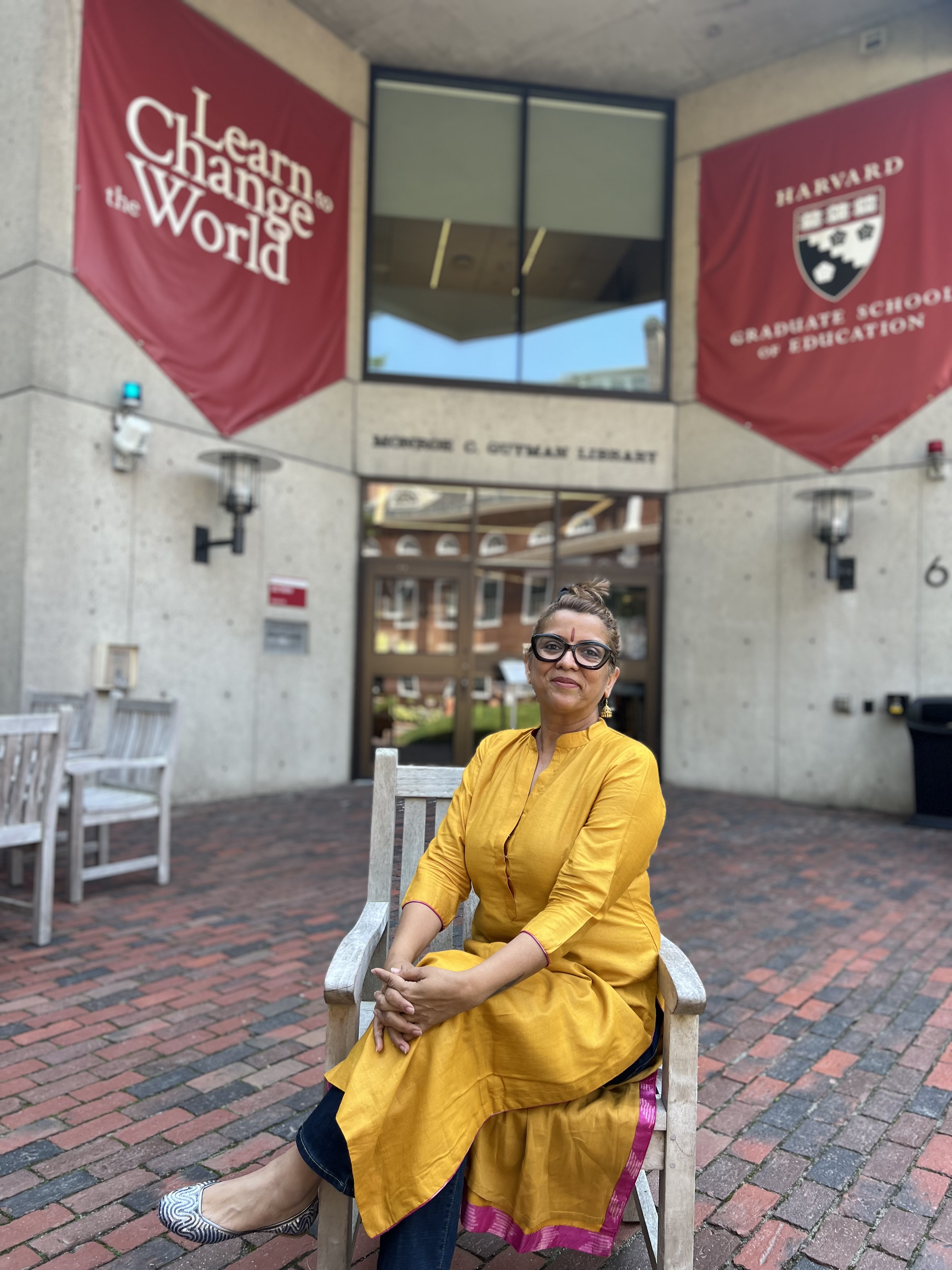
Across her career, Sunita has worked in diverse educational contexts spanning urban and rural India, holding leadership roles as Vice Principal at BJRD Sr. Secondary School and Principal at Ajanta Public School, following earlier teaching and administrative positions. A Delhi State Education Awardee and founder of One World and MomPath, a mental health initiative supporting mothers’ wellbeing, Sunita’s work bridges educational leadership with broader commitments to equity and community care.
My name is Sunita Swaraj, and I am a student in the Education Leadership, Organizations, and Entrepreneurship (ELOE) program at the Harvard Graduate School of Education. My work focuses on democratic learning, literacy, and systems-level change in public education.
Prior to HGSE, I completed my academic training in India and have spent over 3 decades working in education as a teacher, school leader, and K-12 principal. I have led schools in diverse contexts and authored two books on Inclusive Education and Sustainable Solutions. My professional journey has been deeply rooted in practice, particularly in advancing inclusion, student voice, and whole-school transformation.
My lived and professional experiences in Indian schools, across private and increasingly public systems, shaped my commitment to education as a democratic and humanising force. I have witnessed both the extraordinary potential of young people and the structural inequities that limit their access to agency and intellectual dignity. These experiences led me to found initiatives focused on literacy, inclusion, and, most recently, MOMPATH, a mental health initiative supporting mothers’ wellbeing.
At HGSE, I brought deep practitioner knowledge, systems-level leadership experience, a cross-cultural perspective, and a strong commitment to equity and community-focused change. I also brought humility, the desire to learn, rethink, and expand beyond what I thought I already knew.
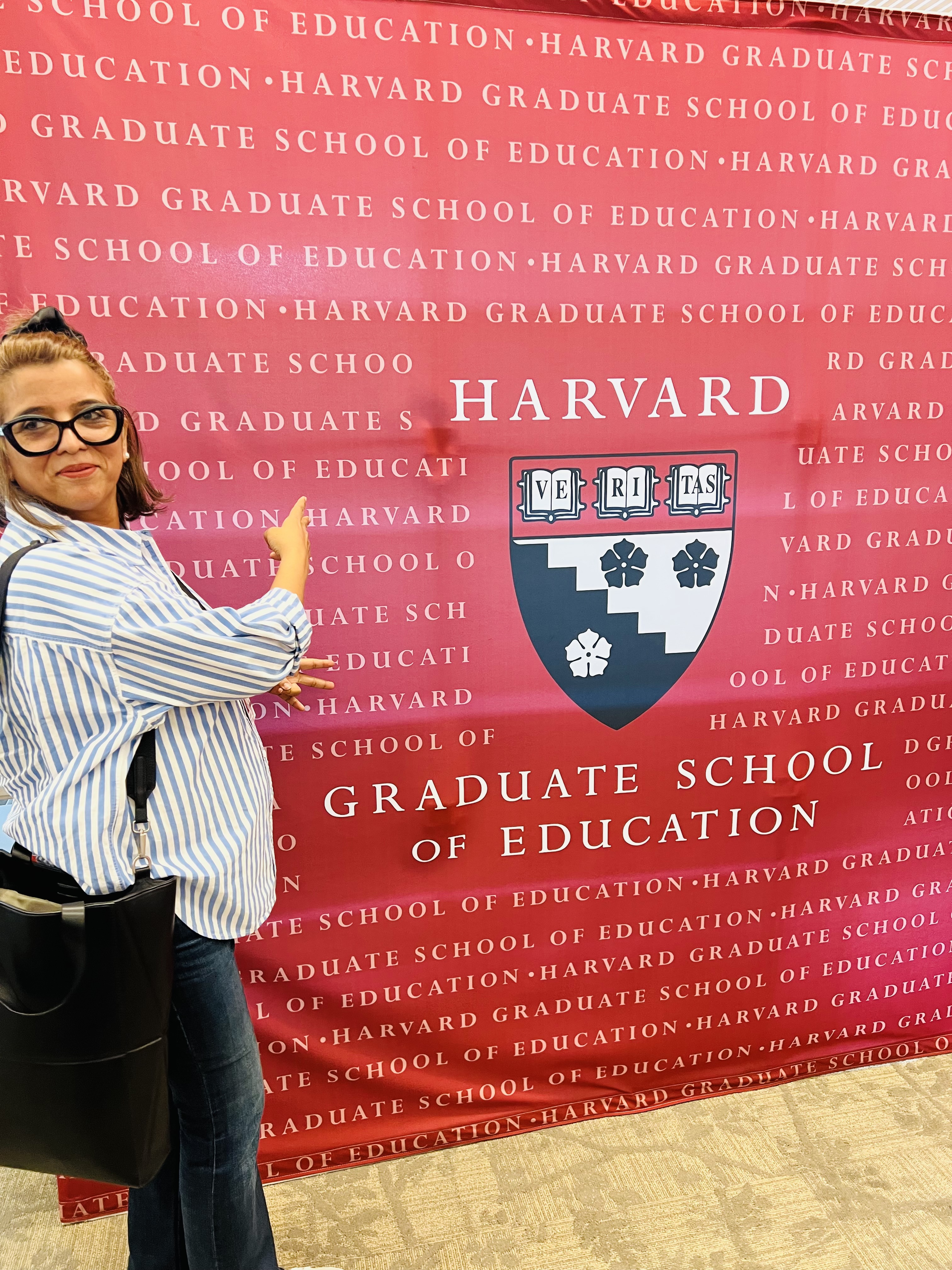
Coming to the Harvard Graduate School of Education as an international student at a mid-career stage is both a privilege and a reckoning.
When I arrived from India, I brought with me nearly three decades of experience as a teacher, school leader, and principal. I did not come to HGSE to start over, but I did come prepared to rethink my assumptions about leadership, learning, equity, and even myself as a learner. Being back in the classroom after years of professional responsibility required a different kind of humility, the willingness to listen deeply, to sit with uncertainty, and to learn alongside peers whose contexts and trajectories were often very different from my own.
One of the most meaningful aspects of the international student experience at HGSE is how lived experience is treated as a form of knowledge. In classrooms, discussions of equity, democracy, wellbeing, and systems change are enriched by global perspectives, not as add-ons, but as essential ways of understanding how education functions across contexts. My experiences from the Indian public and private education systems were not something I had to justify; they were welcomed as contributions that complicated and strengthened our collective learning.
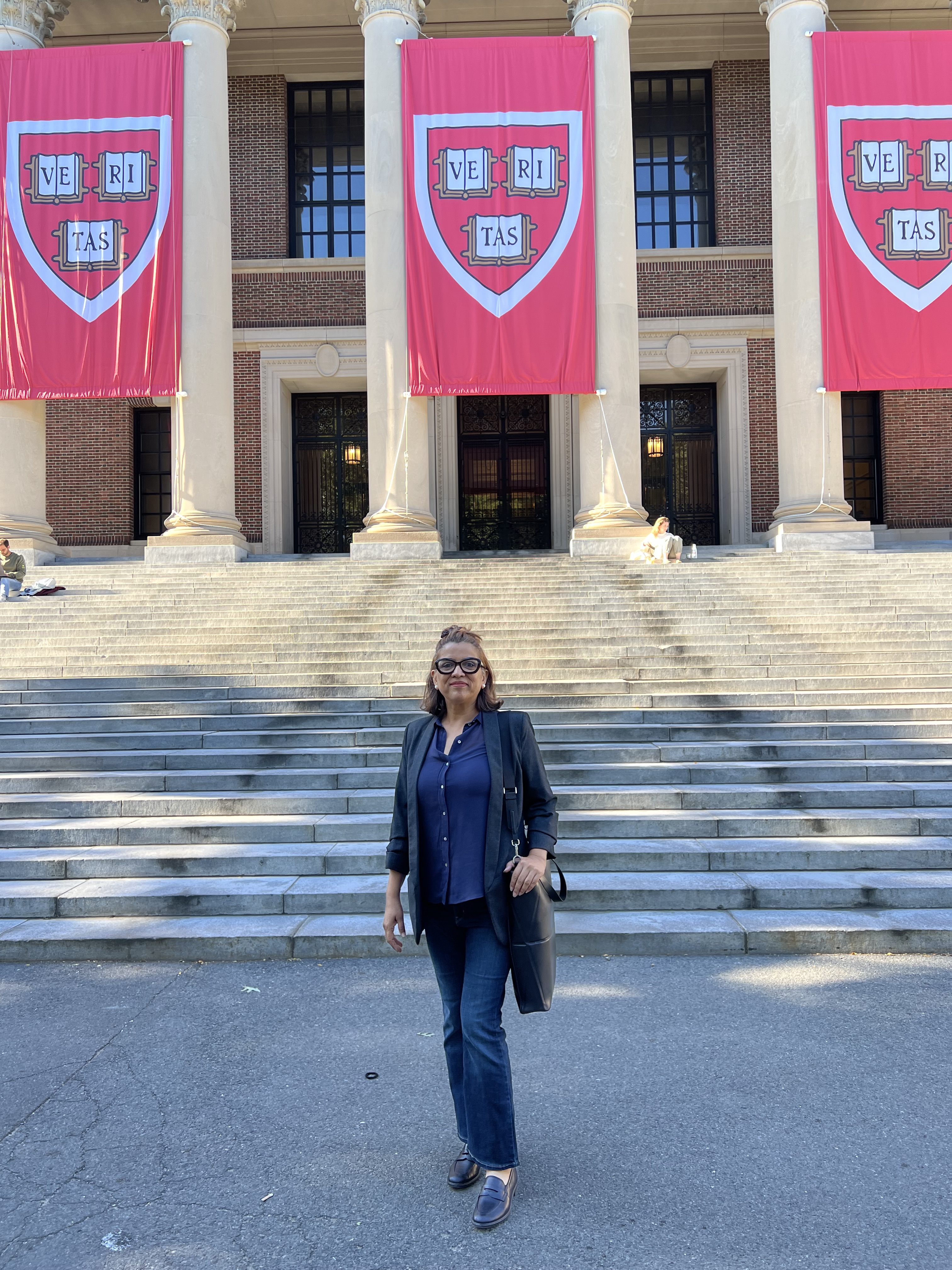
At the same time, being an international, mid-career student comes with its own adjustments. Academic norms, classroom participation styles, and even the pace of conversation can feel unfamiliar at first. What made the difference for me was HGSE’s culture of care, faculty who model intellectual generosity, classmates who approach difference with curiosity, and learning spaces that allow you to grow into your voice rather than perform expertise from day one.
HGSE has been a place where my professional history has been respected but not treated as complete. I am encouraged to question practices I had long taken for granted, to engage with discomfort productively, and to imagine new forms of leadership grounded not only in effectiveness, but in care, dignity, and collective responsibility. For someone navigating a transition, from institutional leadership to broader work in education, wellbeing, and global public systems, this kind of reflective space has been invaluable.
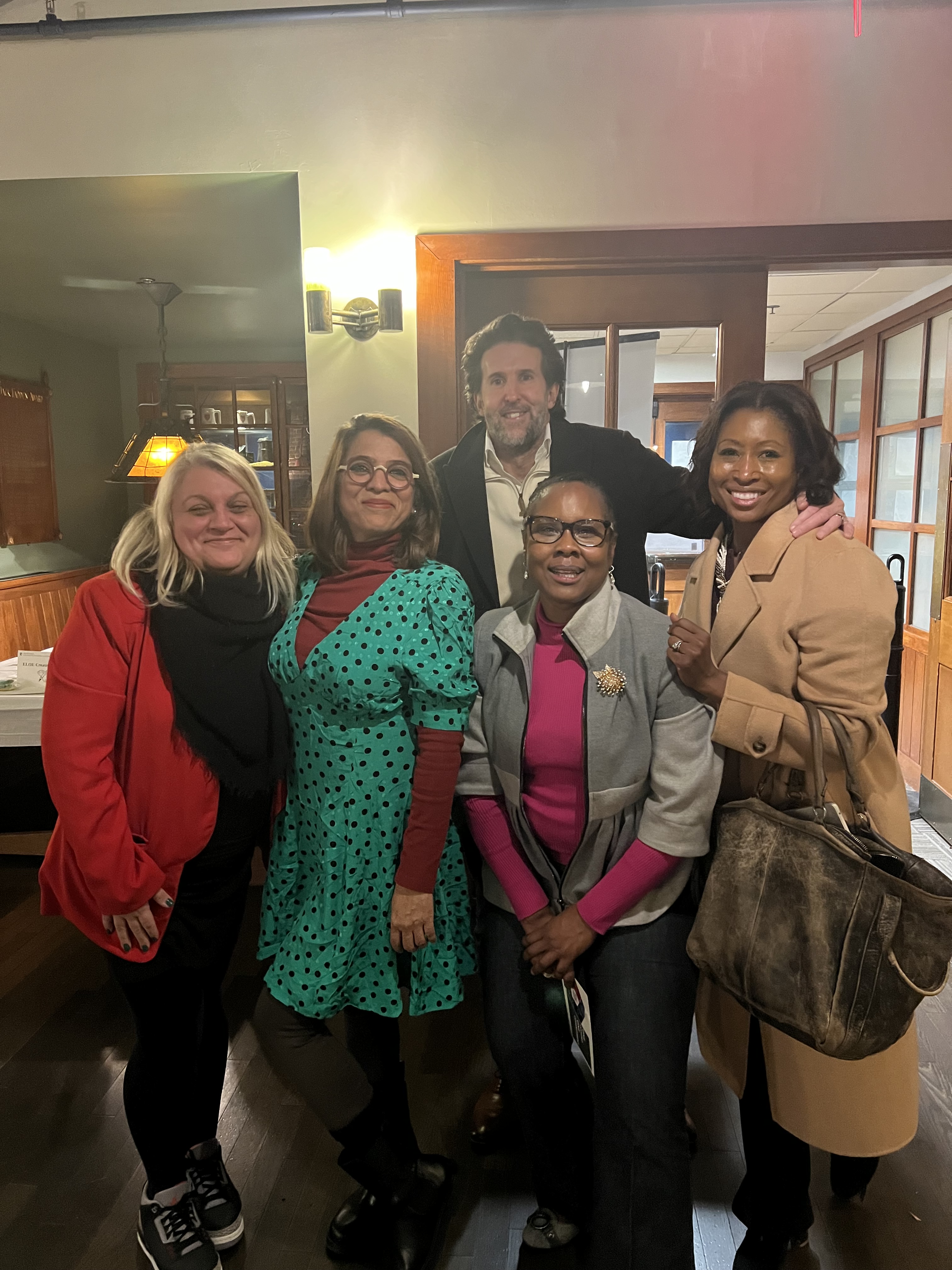
For prospective applicants, especially those considering HGSE at a mid-career stage, my advice is this: come as you are, with both confidence and openness. You do not need to leave your context, your questions, or your professional past at the door. HGSE is not asking you to prove what you already know; it is inviting you to think differently about what is possible, together, across difference, and in service of a more just educational future.
After HGSE, I plan to expand my work in Indian government schools through a literacy-focused NGO that aims to democratisise reading and classroom dialogue. I hope to continue building partnerships that strengthen public education systems by ushering in dignity, voice, and belonging for students and teachers alike.
 HGSE Admissions Blog