With application season underway, we asked Nickoll Garcia, Megan Allen, Rosie You, Dilara Kussainova, and Lilli Xiang from the 2025–2026 HDE cohort to reflect on their paths to HGSE and share how their experiences, spanning student affairs, mental health advocacy, dialogue facilitation, international student support, and community-centered teaching, inform their commitments to nurturing growth across the human lifespan.
Nickoll Garcia (she/her)
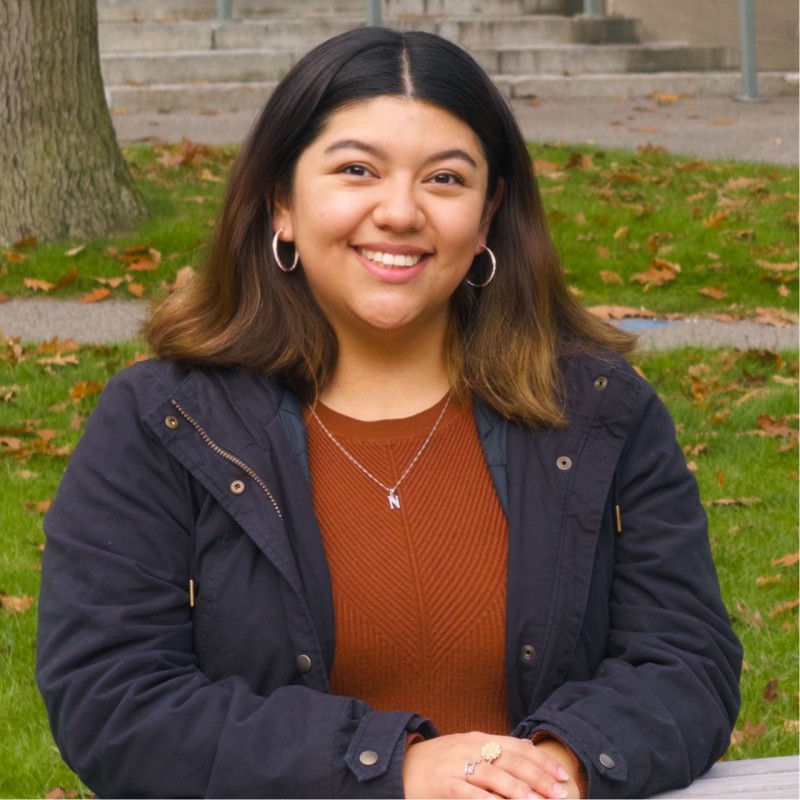
Nickoll Garcia (she/her) is an EdM candidate at HGSE and Graduate Assistant for Residential Programs at Harvard College. Proudly from San Antonio, Nickoll recently graduated from the University of Texas at Austin with a B.S. in Education and minors in Educational Psychology, Critical Disability Studies, History, and Public Policy. Nickoll has experience in residence life, orientation, advising, programming, and out-of-school time with a focus on supporting students of marginalized identities and backgrounds. She is also a Student Ambassador for HGSE Admissions.
In one of our first HDE Program Core Experience classes, our professors showed us a quote by Urie Bronfenbrenner, the creator of the ecological systems theory and co-founder of Head Start: “In order to develop normally, a child requires progressively more complex joint activity with one or more adults who have an irrational emotional relationship with the child. Somebody’s got to be crazy about that kid. That’s number one. First, last and always.”
I take issue with the word “normally,” but I think Bronfenbrenner got the last part perfectly.
I am crazy about San Antonio. I loved growing up with 99¢ bean and cheese tacos, Spurs jerseys, and the Riverwalk. I grew up in the West side— an area that, for the majority of the city’s history, has been undervalued and underinvested. There are not many people crazy about our community, but I knew growing up that they should be.
When I went to the University of Texas at Austin, I turned the homesickness for my city into motivation to return and invest in it. I studied education and worked in student affairs programming for first-generation and Pell Grant eligible students in addition to student recruitment and retention efforts. I worked with elementary students at an afterschool learning center and with middle schoolers at an overnight summer camp, and each experience affirmed my passion for education.
Although my job descriptions focused on safety compliance, literacy skills, or event programming, I was really getting paid to be crazy about someone’s kid: how are they feeling about their midterms, did they wash their hands, do they feel cared for throughout their orientation session and in the quiet corner?
I was unsure of my next steps after college, but the HDE program had it all: a one year program that valued policy, theory, and praxis equally. I could take courses in college student development and higher education in addition to child development and youth participatory action research. I could learn about what people need to develop so that I could start my career with a defined purpose.
This decision was not made lightly. I am a first-generation high school and college graduate; applying to grad school was the hardest thing I’ve ever done and seeing the word “Harvard” everywhere was even harder. But it got significantly easier when I focused on what I was crazy about. I decided that I would return to my hometown and make a difference, with or without HGSE. From there, I could focus on how I wanted to grow, what I wanted to do, and what I was bringing with me to Appian Way.
Prospective students, this mindset saved me. Take the risk or lose the chance, because the January 5 deadline will come regardless. But take the risk with the knowledge that you will be okay either way. I wrote in my journal after submitting my application, “This has been so hard, but I want to do hard things. The fear of looking foolish or feeling embarrassed shouldn’t stop me. Okay, goodnight. I have so much to do.”
Megan Allen (she/her)
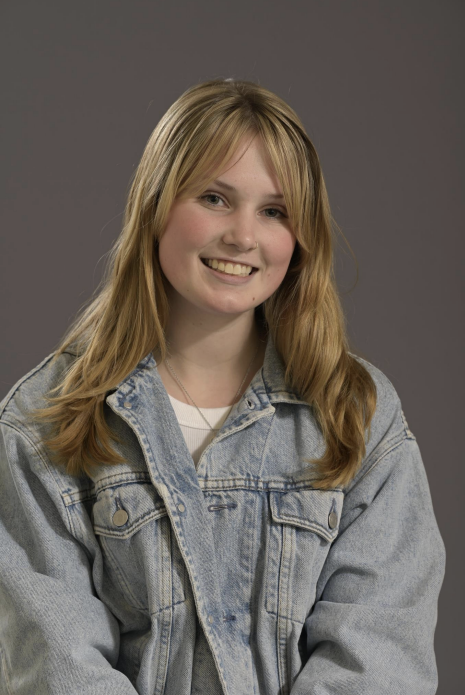
As an avid poetry lover, Robert Frost’s 1915 poem “The Road Not Taken” has been the marker for a lot of my journey since arriving at HGSE. Many of us domestic folks who had to take ninth grade English are probably familiar – “two roads diverged in a yellow wood, and sorry I could not travel both […] I took the one less traveled by, and it has made all the difference”. Most of the time this poem is misinterpreted as individualism, as taking the less conventional path reaps the highest reward. However, what people often miss is the “and both that morning equally lay”, which suggests it didn’t really matter what path the author took and provides an ironic take that our decisions often feel a lot more profound to us after we make them.
I’m not sure of many people who apply to Harvard and expect to get in. Nobody gets the acceptance email from HGSE and goes “wow, what a piece of cake that was!”. Everyone I have met here has made incredible strides, yet no one views their journey as an individual path or a “road less traveled” when compared to others. It is one of the most profound things I’ve experienced at HGSE so far. No one is looking back; rather, they forge new, unseen paths farther ahead and invite you to tag along with them. You might be making individual career or class decisions, but you are never really choosing a path alone.
I chose the Human Development and Education program because of my passion for student mental health and my overall care for student wellbeing. In 2018, I lost a family member to suicide while he was a freshman in college. It was painful, but it also inspired me to do more for struggling students. Since I was a sophomore in high school, I’ve dedicated my time to getting resources to students, developing mental health educational programming, and volunteering my time where it counts.
The program offers flexibility where I can pursue other interests and still get core program content. I’m currently enrolled in a course at HMS called Mental Health, Policy, and Bioethics, where I get to hear the ethics of the medical model of mental health and compare it to my educational school counseling background. Other courses like Adult Development have continued to foster my passion for helping and developing interventions to support one another during what is such an important time in history.
As a HGSE student, some days you’ll wake up and wonder, “how on Earth did I end up here? Was this a mistake?”. It’s totally normal, and it is an amazing feeling to be surrounded by so many wonderful people that you’re left thinking that. Cherish that feeling, and show up authentically. You truly do belong in every space and every less-traveled path that you might find yourself in here.
Rosie You (she/her)
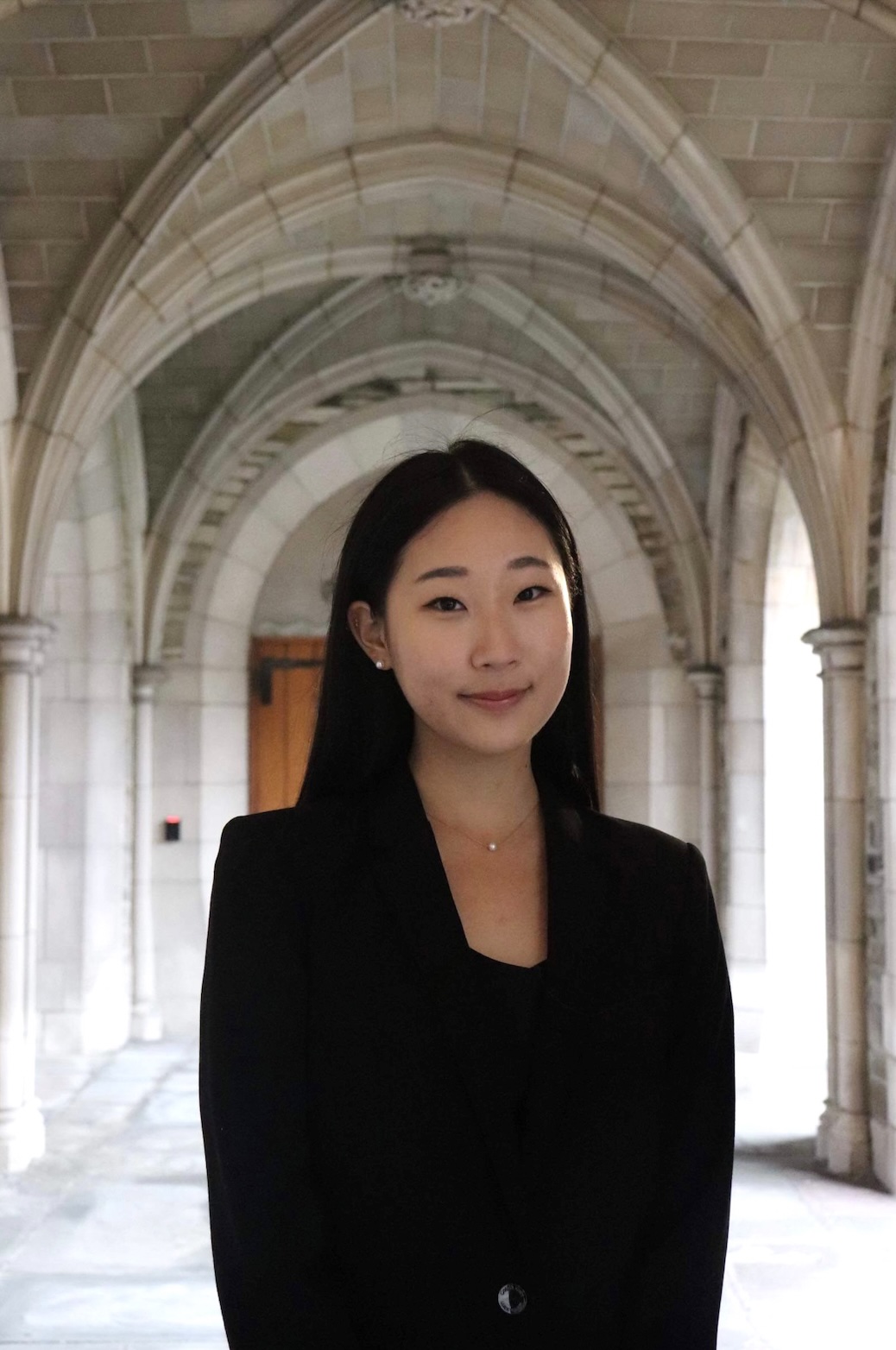
One of my biggest daily dilemmas is that I am indecisive. Whether it is ice cream flavors or my coffee order, there’s just too much I love about every option. My indecisiveness was the same when it came to education, and I used to think that was a flaw.
But my time within the Human Development and Education (HDE) Program has proven me otherwise.
Prior to HGSE, my professional interests have been across a variety of age ranges. I co-facilitated an undergraduate course at Cornell University for numerous semesters, deepening my knowledge and passion for civic education and dialogue-based curricula. During the summers, I was a nursery camp counselor and was able to watch students’ socioemotional skills blossom by the day. I was also a teaching assistant at Boynton Middle School and TST BOCES Tompkins, supporting students with learning disabilities ranging from dyslexia and ADHD to Level 3 autism. I also loved working as a college counselor to empower high school seniors to take agency over their college application process and be excited about their future.
When looking for a graduate program, I initially had looked for more niche programs that focused on one specialization, whether it was TESOL, Higher Education, or Early Childhood. But I soon realized that didn’t represent my journey and vision as an educator. I truly enjoyed understanding and interacting with learners through their lifetime.
The HDE Program stood out to me with its emphasis on being knowledgeable on various developmental domains to fully understand the learner and design strategies to support their development. Education to me is more than the learning of information – it is the process of furthering ourselves as humans.
As I was preparing for course enrollments, I noticed that most of my starred courses were higher education courses, and decided to pursue a concentration in Higher Education alongside my HDE Program. This allowed me to still take courses regarding holistic and life-long human development while also taking niche courses on college student development and higher education administration.
My coursework perfectly aligns with my current role at Bentley University’s Center for International Students and Scholars, as my work revolves around supporting international students through immigration and their adjustment to the U.S., but this can only happen when acknowledging the student as a complex, individualized human.
After graduating from HGSE, I am excited to see where my next path will take me. I wish to continue pursuing student-facing higher education administrative roles, and to support high school students in preparing for and transitioning into higher education. Whether it be back home in South Korea or in the U.S., my purpose as an educator is to make learning engaging, innovative, and self-authorizing.
The Human Development and Education Program at HGSE not only encourages me to further my passions in teaching learners across the lifespan but also inspires me to become a lifelong learner myself.
Dilara Kussainova (she/her)
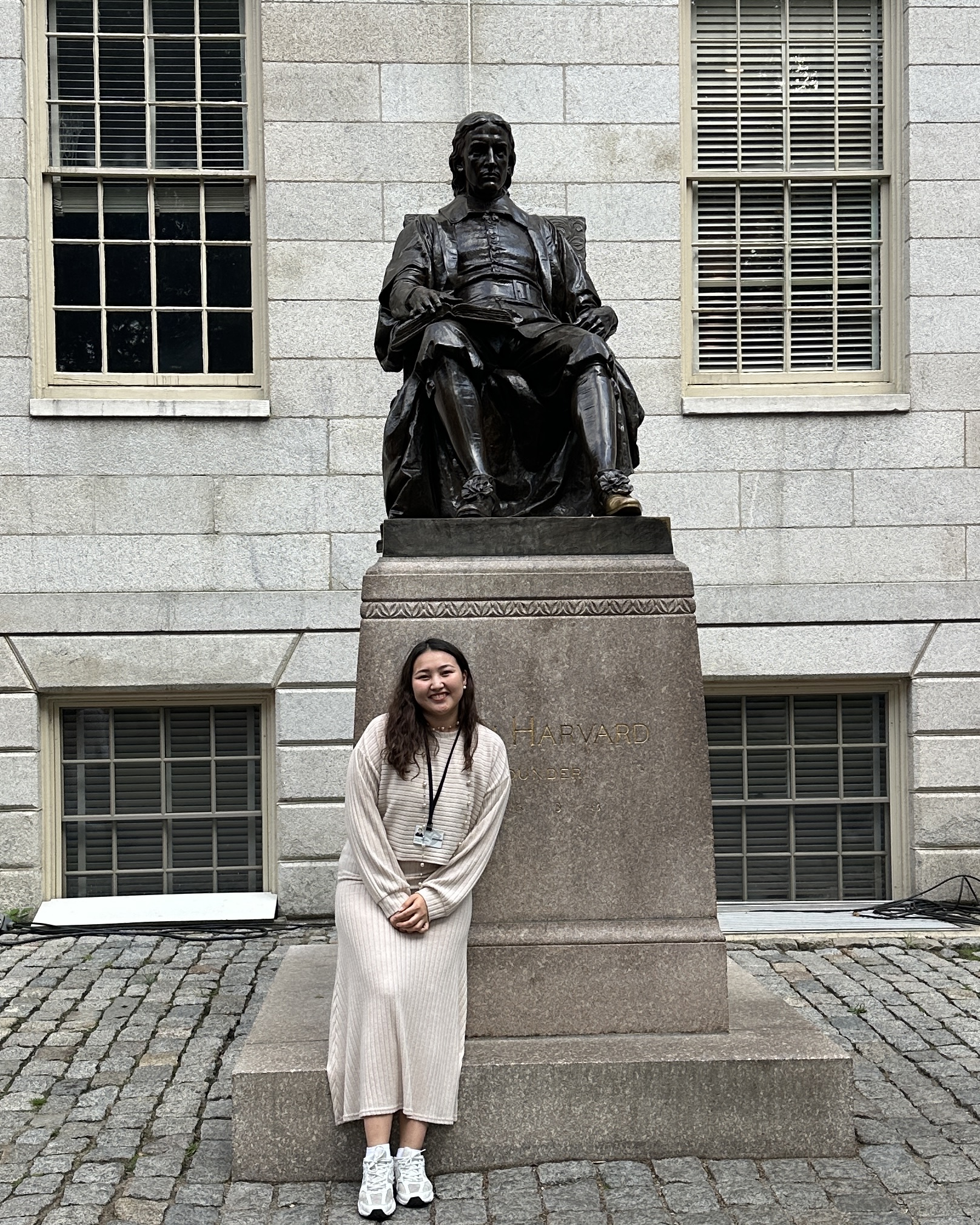
“Who would ever accept me there?” – that was the thought running through my mind when I pressed “submit” in December 2023, sending my Harvard application.
As a woman from Kazakhstan (Central Asia) and a self-taught teacher, I doubted that my experience and knowledge would be enough to study at Harvard. Even though I had already spent ten years teaching, held national teaching certificates, came from a family of educators, and had experience managing teams in educational projects, I still questioned whether I truly belonged. My application journey turned out to be long and unpredictable. Beyond the usual exams and essays, it included a government grant rejection, months of visa uncertainty, and a great deal of faith in the unknown.
In 2023, I submitted my application and felt unbelievably proud simply for considering myself worthy of applying. To my surprise, in March 2024, I received an admission letter from Harvard. Not knowing much about the funding system, I had relied on just one scholarship – and, as the saying goes, never put all your eggs in one basket. I wasn’t selected for that scholarship. Without financial support, I knew I couldn’t afford to study.
That moment could have been the end of the story – but instead, it became a turning point. I gathered my strength and continued working. At that time, I was heading Training&Support at Teach For Qazaqstan (Teach For All partner), where I designed trainings and provided ongoing support for teachers working in challenging school contexts. That experience made me even more certain that this field was my calling. I applied again – to Harvard and to multiple scholarships – determined not to let one rejection define me.
Eventually, I received both the Fulbright and PEO scholarships, and once again, an invitation from Harvard. This time, I knew – it wasn’t an accident.
When I began exploring graduate programs, Human Development and Education immediately caught my attention. The question of nature versus nurture has always fascinated me: why do some individuals thrive while others, even with similar resources, struggle to reach their potential? What helps, and what holds them back? As teachers, how can we nurture that growth? I believe in a holistic approach – seeing the whole person beyond academic performance – and that’s why I knew I had found the right program.
After my first admission, I took Harvard’s online course “How People Learn.” It was transformative and confirmed that I was on the right path. The course helped me see learning as a systemic process shaped by environment, motivation, and relationships. I realized: if an online course could bring so much insight, what would happen if I studied in person? That thought kept me going and gave me strength to apply again.
Now, as an HDE student, I’m taking courses such as Developmental Insights, Adolescent Development, Curiosity in Education, and Qualitative Research Methods. The workload is intense and time goes fast – but my years of field experience help me stay focused and prioritize what truly matters.
After graduation, I plan to return to Kazakhstan to design courses and trainings for parents of adolescents to strengthen empathy, communication, and understanding. I believe that when parents and schools become true partners, we create the best conditions for children to thrive.
If I could give one piece of advice to prospective students, it would be this: apply even if you think you’re not ready. In this process, beyond experience, knowledge, and skills, what truly matters is a drop of courage — the courage to consider yourself worthy of being seen and heard. Because you are.
Lilli Xiang (she/her)
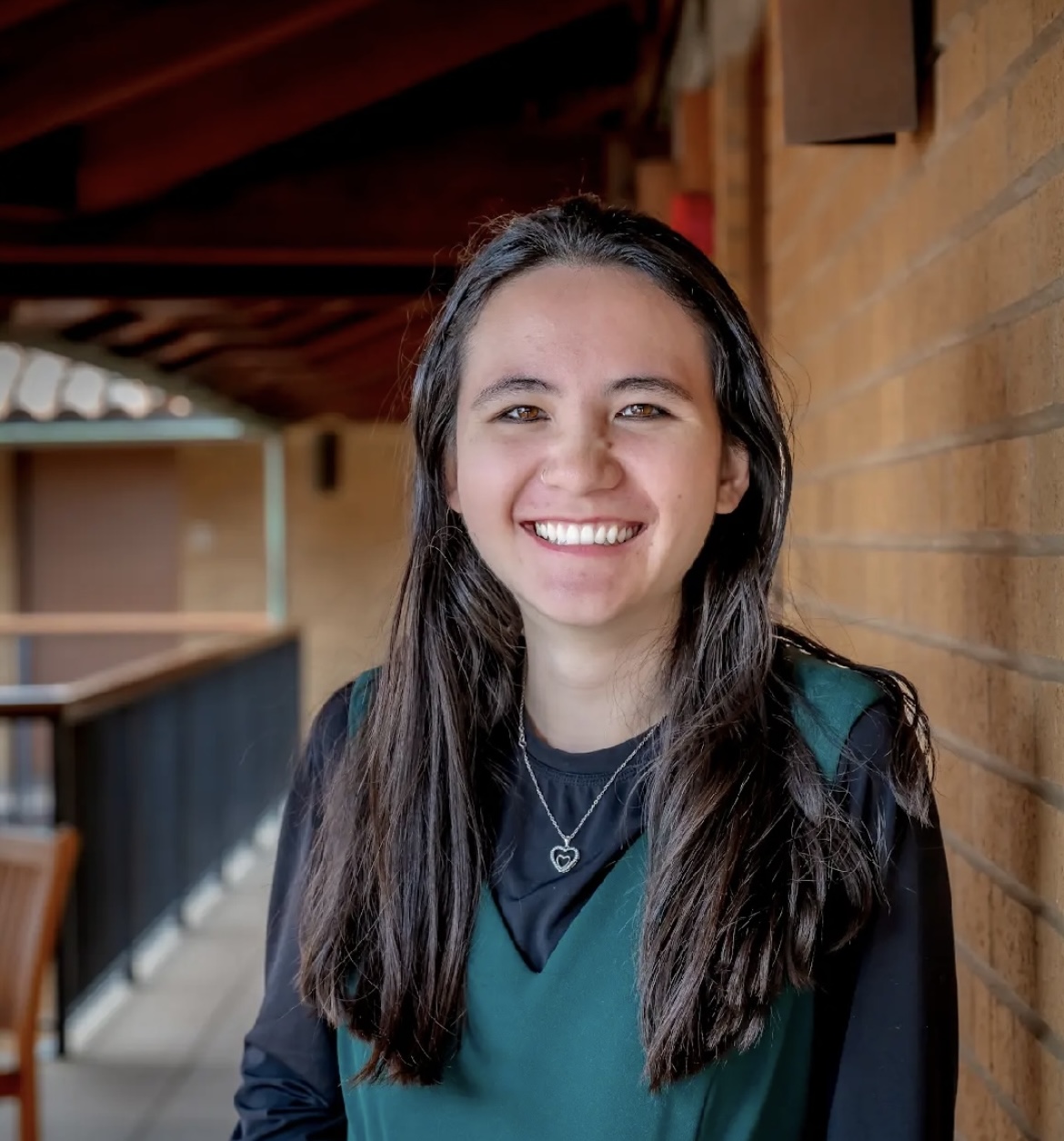
I rarely talked when I grew up. It wasn’t just that I was shy: I quite literally didn’t communicate in an expected way. Diagnosed with SPD at age 8, I navigated a fascinating world and largely processed it alone. With the little communication I had, school was a place of dreams where I could not participate in.
Years later, thanks to the opportunity to attend Occupational Therapy and Social Skills groups, I could make and keep friends more easily, hold a conversation, and do many things that were once beyond my ability. Around me, I noticed those who continued to struggle to participate and belong within school: through talking with them, I understood that many different things contribute to this. Yet, I noticed certain things seemed to bring the same people together: connection, community, and feeling like they mattered within a larger system. I wondered how to make this work for people who could not access conversation or participate in a traditional way, like me.
High school and college grounded me in a firm belief: beyond academics, every student has a story that matters and the ability to dream, and for this to be realized, having belonging and access to fully participate within school systems is fundamental. My activities as a student focused on fostering community dialogue and student input. To learn how to build communities in the educator role, I studied at the University of North Texas, became a math instructor in New Jersey, and later, my path brought me to apply to HGSE.
What motivated me to apply for HGSE was seeing the genuine impact in education of not only the faculty and staff, but each cohort’s dedication to expanding access to quality education for all populations. Reading biographies of how past students applied their program learning in their home communities strongly inspired me towards choosing HDE. I understood the flexible curriculum would help me focus on my education interests and learn new topics that would challenge me. In courses from Statistics to my HDE Program Core Experience, I’ve learned different ways that participation in education systems takes place through practice, theory, and discussion At HDE, my worldview has been tremendously expanded, the ways I’ve theorized pedagogy has changed, and each class, with incredibly thoughtful professors, has caused me to reimagine how to answer the questions I started with.
For me, HGSE has been nothing short of life-changing. A key word is FUN: from courses, student meetups, and many events, life on campus has been an enriching, powerful experience with many smiles and conversations. My professors’ teaching pedagogies have helped me reflect on my practice, and their feedback shapes every aspect of my projects.
My advice for anyone considering the HDE Program: about where you come from and what matters to you. HGSE is home to people from many walks of life, with different lived experiences. It’s just the start of a journey, and you belong here.
 HGSE Admissions Blog