With the application season underway, we asked Alban Martinez, Aria Irani, and Jake Turner, members of the 2025–2026 EPA cohort, to reflect on their paths to HGSE and share how their diverse experiences, from teaching and government service to community organizing and global research, shape their visions for equity and change in education.
Alban Martinez (he/him)
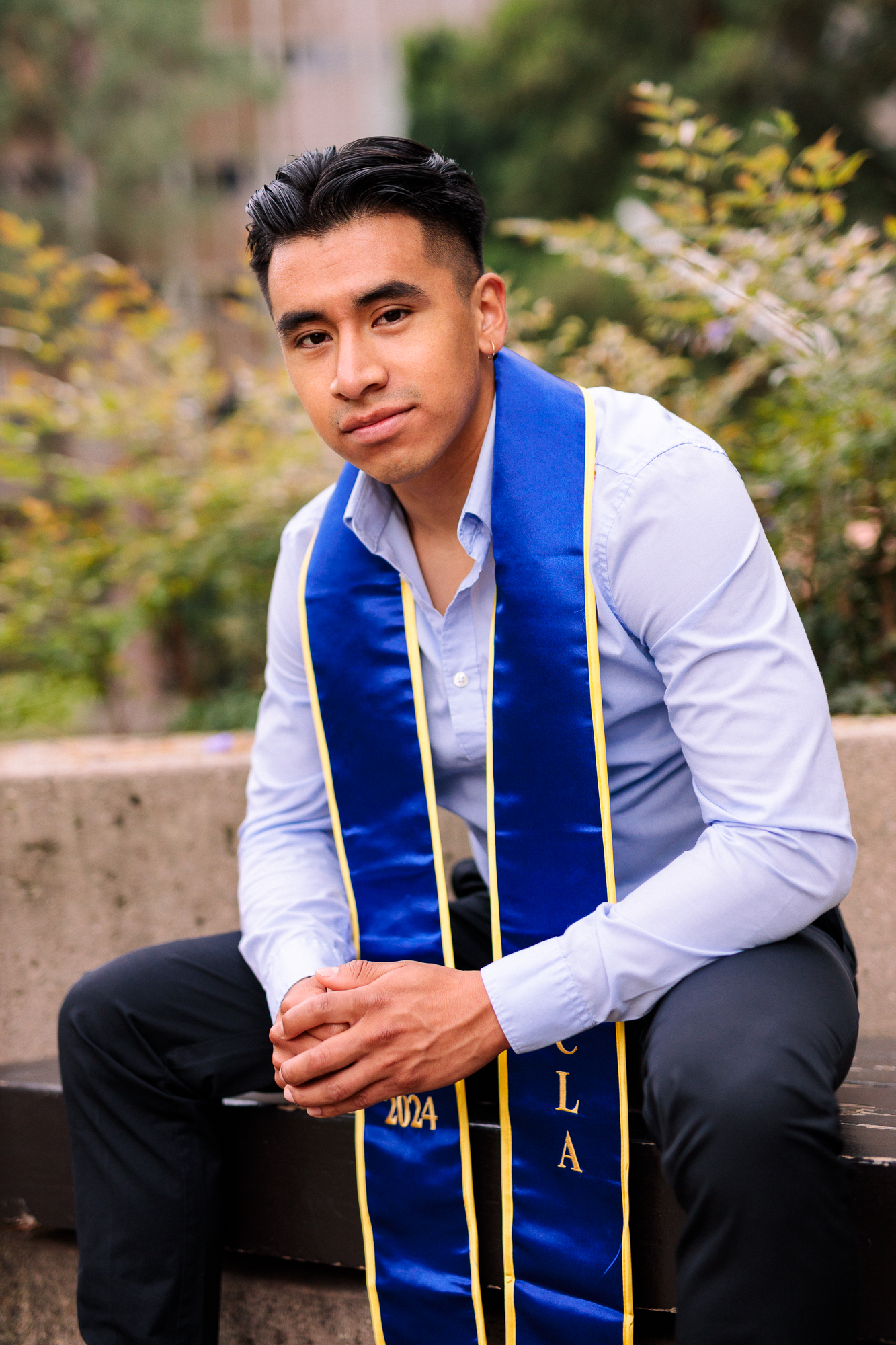
As a student who did not perform well in high school, it took struggle and reflection for me to discover my personal interests and drive to pursue a goal. Community College was a fundamental moment in my life that allowed me to restructure my educational goals and gave me a comfortable pace to explore further interests, one of which was an internship at the Mayor’s Office of International Affairs for the City of Los Angeles. This internship laid the foundation for my newly formed network, as one of my Supervisors encouraged me to apply for another program as a Student Ambassador for EXPO 2020 Dubai.
Throughout my experiences, I learned that people believe in you, especially when you work with your heart and respect their time. Balancing Community College classes online and living in Dubai for 7 months, I had the unique experience of gaining perspective and inspiration without the pressure of adhering to the strict timeline of a “traditional student.”
Returning home to Los Angeles and beginning the new chapter of undergrad at UCLA, I majored in International Development Studies. The classes, peers, and faculty all shared similar passions, motivated to create some kind of change. Inspired by my parents’ endless work ethic, I knew I could handle more on my plate, even with a full-time job and being a full-time student. In my senior year, I was awarded the Citizen Diplomacy Action Fund grant, which I used to help create a community garden program that focused not just on gardening but also on environmental pedagogy and global citizenship education.
My UCLA Professors connected me with a non-profit called the Refugee Children Center, and with the help of other community leaders and families eager for a community garden, the garden grew and grew. Connecting with new people and Professors has been a crucial step before, and now at Harvard, it feels even more critical.
The words “Research Practitioner” have been floating around and seem to be of interest to me without me realizing it. The Education Policy Analysis (EPA) program has brought personal insights from a multitude of Professors, in addition to the speakers they invite to speak in class. Their diverse work experiences allow for engaging class conversations and provide a foundation for knowledge of policy.
Being part of the EPA program, I value the complex skill of understanding and implementing policy accurately, but the practitioner portion may be even more crucial. Reflecting on my love for community organizing and the joy of capturing children’s curiosity, I continue to seek out further opportunities to build on these experiences. Fortunately, you can find inspirational Professors who are open to sharing a bit more insight about their work experiences and can help you explore yours.
Being here at HGSE in the EPA program is motivated by my love for the City of Los Angeles and its diverse faces, especially the young students who face different forms of struggle daily in hopes of making their lives easier.
Aria Irani (she/her)
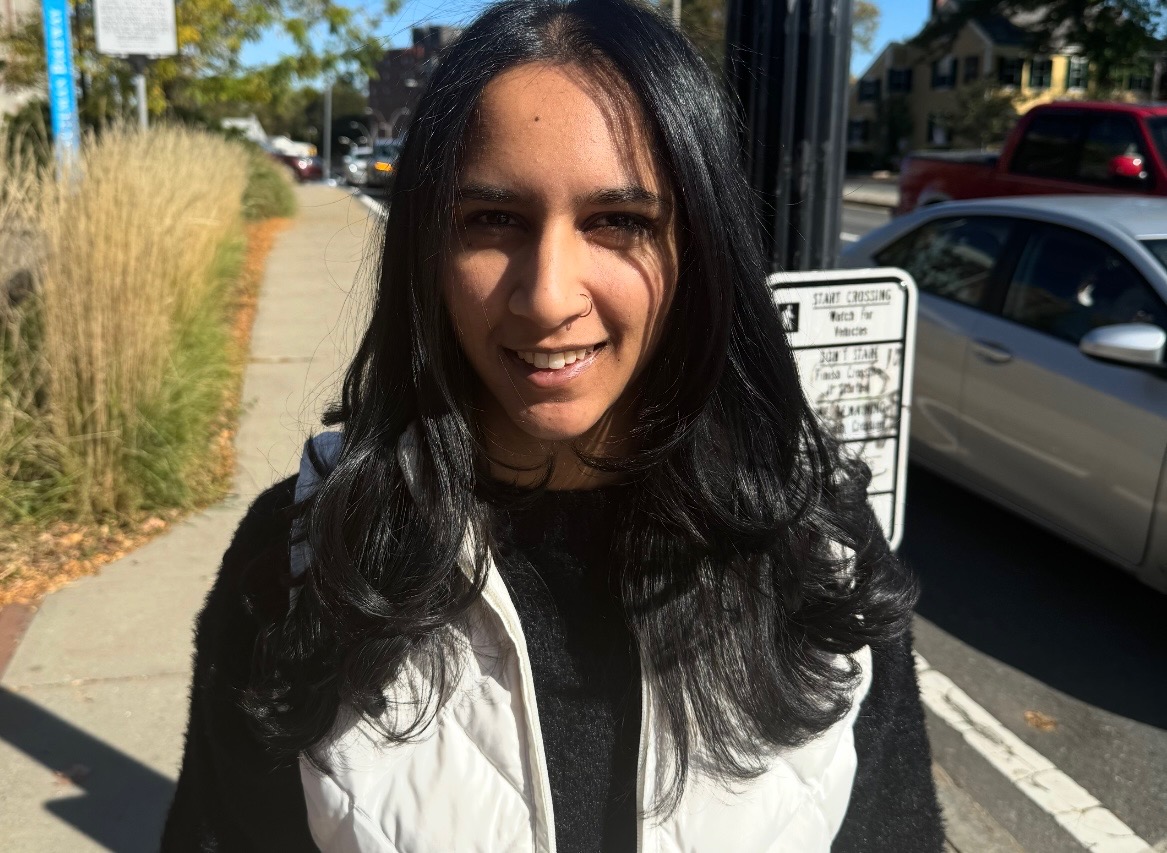
Global, International, and Comparative Education (GICE) concentration. After growing up in
Asheville, North Carolina, she moved to Washington, D.C. to complete her undergraduate
degree. Aria received her B.A. in Justice, Law, and Criminology from American University in
2024, where she concentrated in counterterrorism studies and minored in Spanish. During
college she interned for a congressional campaign and for the Global Terrorism Database. After
earning her B.A., Aria worked for the State Department, helping organize the 2024 NATO
Summit in D.C. She frequently visits family in India and is enjoying her time in the HGSE
community.
Despite having spent years dreaming about working in the government, I often felt drawn towards education when sitting in my undergraduate counterterrorism classes. I loved studying counterterrorism strategies and criminology, but over time I became increasingly interested in education’s power to fundamentally impact violent extremism globally. This is what led me to apply for HGSE’s EPA program: a desire to learn how to promote counterterrorism and peacebuilding through education policy.
When applying to HGSE, the EPA program was particularly interesting to me because it would allow me to look at educational issues on a policy level. The EPA program teaches me how to analyze, implement, and adapt policies that have real change. Classes examine policies from all over the world, and are taught by teachers who have been at the forefront of education for decades. This experience exposes me to a multitude of perspectives and is preparing me with the skills to succeed professionally wherever I am.
My advice to prospective EPA students would be to believe in yourself and your ability to excel here. I had never thought of applying to an Ivy League school before Harvard, and had never believed I was capable of being in such a rigorous environment. I often felt less intelligent or capable than my peers, making Harvard the last place I imagined myself at. For prospective students, taking the risk to apply is the first step in believing in yourself and your ability to succeed here.
There are still days here where I feel behind, unconfident, and underqualified, but HGSE has shown me that almost everyone feels this way at some point. While there are high expectations at HGSE, I would describe HGSE as challenging rather than competitive. The faculty and peers want each other to succeed, and you learn so much each day. The HGSE community is full of people who are trying their best – no one here is perfect, and the passion and curiosity you bring to HGSE is what matters the most.
HGSE is somewhere where people from all backgrounds are welcome. When applying to the EPA program, I was worried that coming from a non-education background would put me at a disadvantage. This is far from true: while I have had to put in effort to learn some education basics, my experience in government has proved extremely useful. Being able to approach classes from a different angle has enhanced my learning, allowing me to use my strengths to my advantage. Don’t let a lack of prior experience in education discourage you from applying to HGSE, as your diverse background may be what makes you a perfect fit here.
HGSE has provided me with opportunities to learn from incredible experts, meet kind and talented peers, and experience being a part of a community that’s eager to learn. I’m grateful to HGSE for the chance to expand my knowledge each day and hope you believe in your ability to succeed at Harvard. I wish you good luck as you navigate the application process and I hope you find your home at HGSE!
Jake Turner (he/him)
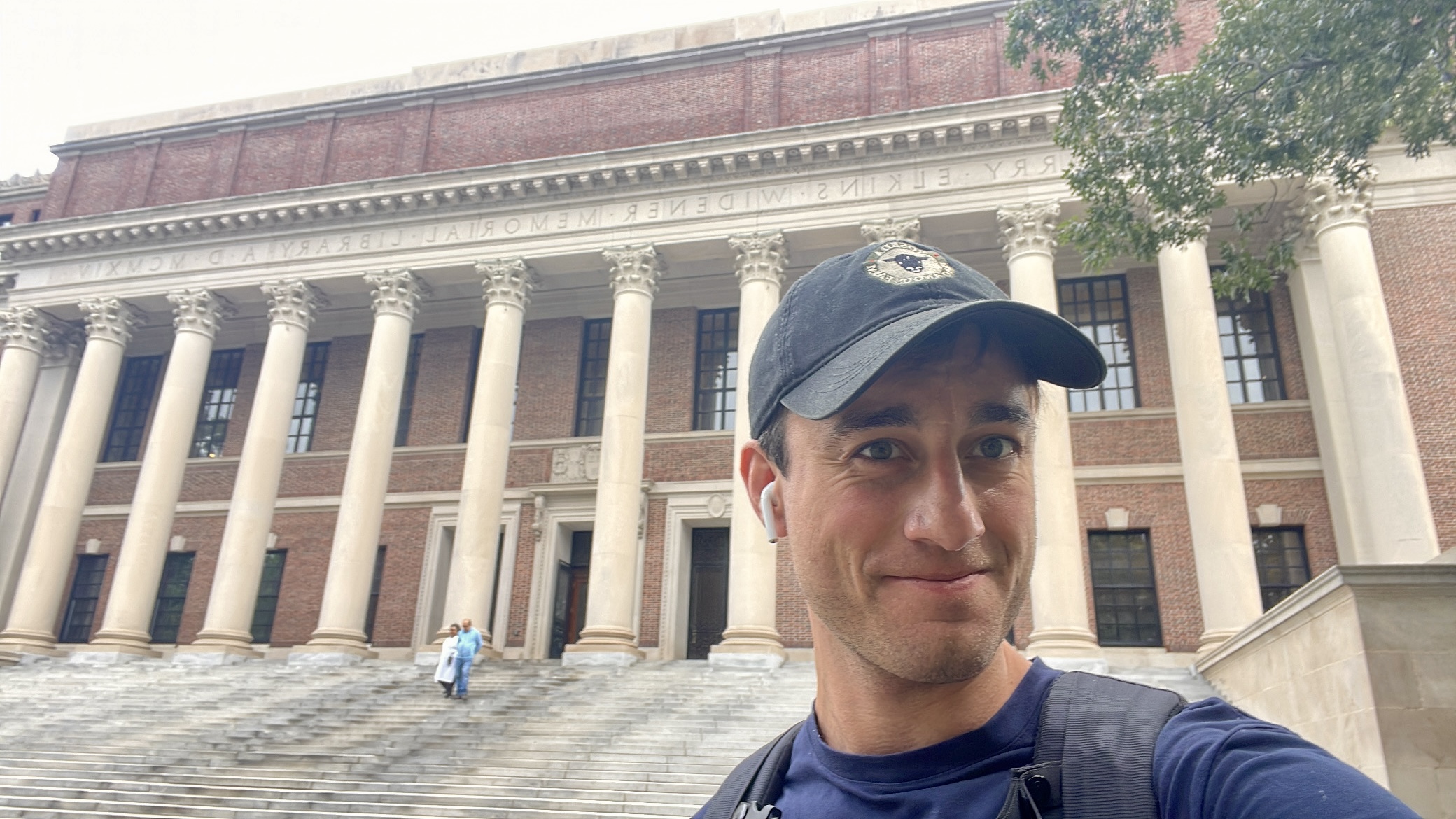
I first became interested in how schools work not as a teacher, but as a student trying to make them better. In high school, I served as President of the Baltimore County Student Council, sat on the Board of the Maryland Association of Student Councils, and joined the College Board’s Youth Advisory Council. I also participated in district-level policy teams that tackled issues like grading, reporting, and school scheduling. These early opportunities gave me a firsthand look at how policy decisions are made and how deeply they affect students’ experiences.
In college, I focused on business and policy because I wanted to understand how systems operate and how decisions are made at scale. I was drawn to questions about leadership, strategy, and accountability, but I realized that I missed the human element. Education had always been where my heart was. I wanted to connect the systemic side of decision-making with the personal impact of teaching and learning.
That realization led me to Teach For America (TFA), where I taught first grade in New York City while earning my Master’s in Childhood Special Education. Teaching taught me more about equity, resilience, and empathy than any course could. It showed me the incredible potential of every child and the barriers that too often stand in their way. Later, as an Operations Manager for a summer school in Baltimore, I saw how strong systems, thoughtful leadership, and clear policies make it possible for teachers and students to succeed. Those experiences convinced me that lasting change in education requires leaders who understand both instruction and infrastructure.
I came to Harvard to better understand the systems of power that shape education and to learn how to drive meaningful, evidence-based change. What I value most about the EPA program is how practical and grounded it is. Every course connects theory to real challenges in education, both in the United States and globally. We are encouraged to approach policy problems with analytical rigor while also applying creativity and compassion. The program challenges us not only to understand the system as it exists, but also to imagine how it can be improved and to turn those ideas for change into action.
For those considering the EPA program, my strongest advice is to spend time in reflection before you apply. Ask yourself why this degree makes sense for you, why now is the right moment, and why Harvard is the right place to grow. The most compelling applications come from people who know their “why” and can express it authentically. And once you are here, keep that “why” close—it will guide your learning and remind you why this work matters.
Good luck to all future applicants! The EPA program will challenge you to think boldly about what is possible in education and prepare you not just to understand the system, but to change it for the better.
 HGSE Admissions Blog