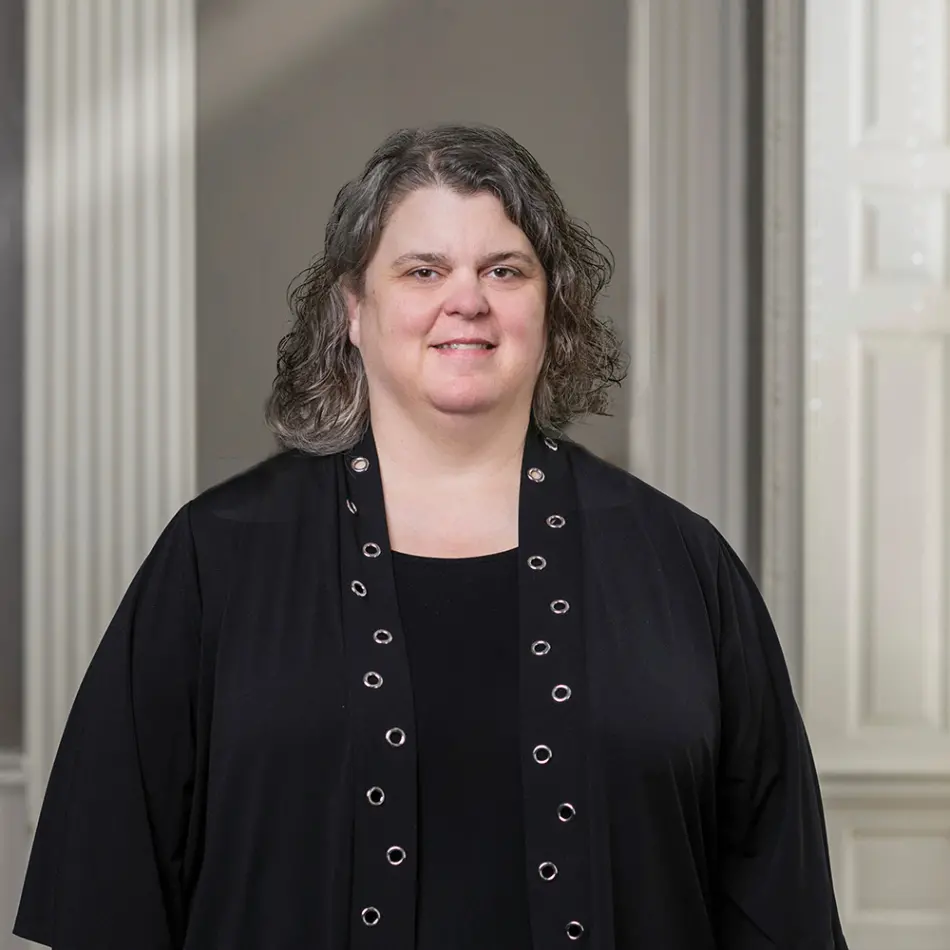
Carrie Conaway (she/they) is a senior lecturer on education here at HGSE, as well as the faculty co-chair for the Education Policy & Analysis program. She has been at Harvard since 2019, and has nearly 20 years of experience in integrating research and practice to improve public policy.
What brought you to the field of education?
A job posting! My career has always focused on strengthening the connections between research and practice, from being a social sciences magazine editor to a policy analyst to deputy director of a small think tank. But it wasn’t until I responded to a job posting for a research director at the Massachusetts Department of Elementary and Secondary Education that I moved into education policy. Fortunately for me, it was in the mid 2000s, when education systems started paying a lot more attention to research and data use – so it was good timing all around.
What are some of the classes that you teach, and what is your favorite class to teach?
In August term, I co-direct and teach Evidence, one of the four Foundations courses required for all EdM students. That course introduces students to four common types of research evidence they’ll encounter as education professionals and builds their skill in evaluating their quality and relevance for real-world challenges. And in spring term, I teach Making Data Count, which focuses on how to use data to inspire change. We focus less on calculating numbers and more on asking the right questions of our data and communicating the answers effectively. They are both my favorite for different reasons: Evidence because I believe that research literacy is so essential for every education professional, and Making Data Count because it’s basically teaching other people how to do my old job, but without them having to learn everything the hard way like I did.
Is there any research/initiative you are currently working on that you’d like to share more about? How are HGSE students involved in these efforts?
Over the course of this school year, we are revising the Evidence curriculum to move the case context to São Paulo, Brazil, to reflect our increasingly global student population. Starting in August 2026, all the readings and activities in Evidence will be grounded in using different forms of research evidence to help São Paulo improve academic outcomes for students in later elementary grades. I’ve been fortunate to work with two PhD students, Jeannette Garcia Coppersmith and Abigail Orrick, on building out these revisions, along with my Evidence co-lead, Jimmy Kim.
What is your favorite thing about working at HGSE?
I feel fortunate to work at a school that teaches quantitative methods well. Having taken many, many bad statistics classes over the years, it’s a real privilege to be able to say honestly to students that no matter which quant course they take, they will have a great instructor. And I’m glad to be able to contribute to that tradition myself through my own courses.
Who is an educator that inspires you?
One educator who stands out for me is Dr. Michael Lechnar, my social studies teacher in grades 11 and 12. His AP U.S. history and small seminar courses introduced me to what social sciences looked like at the college level, and it got me curious to learn more. I eventually earned degrees in sociology and public policy, and I’ve worked in social science research my whole career – in no small part thanks to him.
 HGSE Admissions Blog