This summer marked the halfway point of my Ph.D. program. Somehow, in what simultaneously feels like the blink of an eye and a huge chunk of time, three years have elapsed. What my day-to-day looks like has changed — in years 1 and 2, most of my time was spent on coursework, whereas now it’s mostly spent on teaching fellow responsibilities and my own research — but a couple of big lessons I learned early on have continued to stand me in good stead. As you think about beginning your own PhD journey, keeping these pieces of advice in mind might help you focus on what matters and avoid learning things the hard way.
Remember why you came
Grad school is hard! Sometimes, when you’re having a rough day/week/semester, it can be easy to lose sight of why on earth you ever wanted a Ph.D. When I’m having days like that, I do one of three things. 1) I talk to someone who knew me pre-Ph.D., which helps remind me that there is life before, after, and outside of my academic work. 2) I re-read my statement of purpose and remember that I had good reasons for wanting to be here, and I just need to focus on that purpose. 3) I go for a walk around campus, taking time to look at the buildings and remember the sense of awe and wonder I felt the first time I set foot on campus. Once upon a time, getting a Ph.D. at Harvard was a goal so big I was scared to even dream it, but now it’s my reality. That’s wild.
Your work is important, but you are too
As a PhD student, you’re going to experience some stress. Over the past few years, I’ve developed a set of coping strategies to make sure that even when things get busy, I’m still taking care of myself. For me, that looks like eating well, getting enough sleep, going to the gym regularly, seeing a therapist, and setting boundaries at work. One great thing about Harvard is that there’s lot of resources to help me do that! As a Ph.D. student, you get access to Harvard’s gyms, including all of the awesome fitness classes (I’ve become a Zumba devotee, but other classes are great too). It’s a great way to take care of my body (and mind — boost those endorphins!) and it can be especially fun with a friend (this semester, I have a standing date with my best friend in the program to go to a fitness class together, which means we see each other at least once a week, do something that’s good for us, and then catch up afterwards). There’s also a farmer’s market on campus on Tuesdays, which is a great way to nab some yummy local produce. Seeing a therapist at Harvard University Health Services is included in the student health fee, and it’s also possible to use the student health insurance to see an outside provider. And last, while everyone works hard, professors and students alike are generally understanding of the need to turn off our laptops and spend time with loved ones or non-academic pursuits. All of the above combine to make self-care a real possibility in the Ph.D. program here, which is great.
Find your people, and make them a priority
A Ph.D. is a long endeavor, and no one gets through it alone. I’ve been really lucky to find amazing friends and communities at Harvard, and they’ve sustained me while on this Ph.D. journey. Like most schools, HGSE and Harvard have affinity groups for students of color, queer students, and other marginalized students. In addition, while some of my closest friends have come from my own cohort, older grad students have also been an invaluable source of wisdom and support for me, so I highly recommend getting to know peers from across cohorts. One community unique to HGSE, though, is the Harvard Educational Review. On paper, it’s a well-respected academic journal. But in reality, it’s way bigger than that; HER’s editorial board has been one of my central communities in grad school. I learned so much about how to be a scholar from my time on the board, and my fellow editors have become trusted colleagues and valued friends. If you wind up here, you should think about joining; for good reason, everyone who does it says it was one of the most impactful experiences and meaningful communities they engaged in while at HGSE.
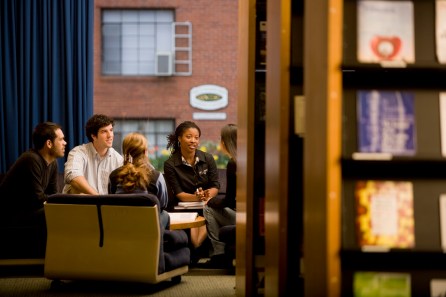
There’s so much that could be said about the PhD experience — it’s a whole 5-7 years of your life, after all! — but I think the above three points get at a core point: getting a Ph.D is a journey, and it’s about a lot more than just your work. If you’re thinking about a Ph.D., you’re already thoughtful and intentional about the kind of work you want to do — so just don’t forget to stay grounded in that purpose, take care of yourself, and build community along the way.
Blog written by Nadirah Foley. Photo provided by HGSE Admissions.
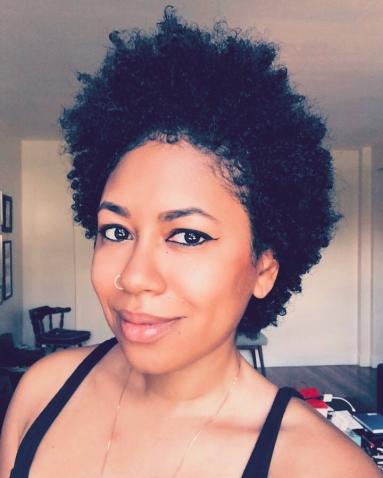 Hi y’all! My name is Nadirah Farah Foley, and I’m a 4th-year in the Culture, Institutions, and Society strand of the Ph.D. program. Before coming to Harvard, I concentrated in Classics in undergrad, and then spent the following few years working in college access, selective admissions, and student affairs. Since coming to Appian Way, I’ve been a teaching fellow, a research assistant, and an editor of the Harvard Educational Review — and perhaps most excitingly, this spring, I’ll be teaching my own class, a module entitled “Reconsidering Merit(ocracy).” My research focuses on class and inequality in education, particularly how race, class, place, and family structure shape cultural processes and students’ experiences. When I’m not working (and I do try to maintain a healthy work-life balance!), I can be found at zumba class, cooking for friends/loved ones, and exploring New England.
 HGSE Admissions Blog