As a staff member and aspiring part-time student at HGSE, I had the luxury of time and conversation before diving into classes. This is how I discovered Adult Development with Deborah Helsing in the spring of 2017. At the time, I was a non-degree student with dreams of receiving an acceptance email when a current student mentioned this class to me. She was in the coaching strand of the Language and Literacy (L&L) program and was required to take the course to complete her degree. Although the Education Policy and Management program felt far from the L&L curriculum, I thought, sounds interesting and registered for Adult Development.
Almost two years later, I can say this class completely altered my way of thinking. And so, I’ll walk through the spiel I give everyone for why they should take this class – even if they’re not in the coaching strand of L&L!
You will learn so much about others
If I had to break the course into two chunks, it would be 1) learning about how adults continue to develop past adolescence and what that means for their outlook on life and 2) using the immunity to change framework to analyze your deeply held misconceptions and how they impede change. The first part really helped me think about how people receive and use feedback – personally and professionally. In this class, you explore the idea that people’s actions, reactions, inactions – just like that of a toddler or teenager – might be due to their stage of development rather than a personality trait or intent. I explored this in my final paper by analyzing interviews with two early education leaders about their professional development experiences to suggest which forms of PD would be most helpful per their stage of development.
You will learn so much about yourself
Which leads into the second part of the course, analyzing your own internalized narratives and how they can hinder change and development. This work became very personal and deep for me. After the 2016 election, I avoided friends and family with differing political views. I approached conversations as an adversary and dismissed their opinions, and sometimes the person, as evil. This class pushed me to consider my own assumptions and inferences about those I (sometimes justifiably) called stupid, cruel, uncaring based on their ideology. I began to listen deeply and reflect on my knee-jerk reactions before responding. I still struggle and disagree fundamentally with these loved ones, but I found peace in identifying where I can stop fueling fires and instead open dialogue that starts with an assumption of love.
You will do this work with amazing people in creative ways
This type of work was hard. But I never felt alone. There are hour long section meetings each week with about 10 other students and a fabulous Teaching Fellow. These aren’t meant to be therapy sessions, my TF cautioned, but they’re emotionally intense. Using the theory and frameworks, we supported one another to grapple with the content and our own personal struggles. The teaching team is incredibly kind, compassionate, and experienced. Get ready to deeply listen to your colleagues and vice versa.
The teaching is also engaging and dynamic. Professor Helsing uses recorded interviews, case studies, readings, and partner activities to facilitate learning. There truly is something for everybody in this class.
As a note, this course doesn’t cover professional development for early educators or dealing with contentious family debates. Those are just a few examples of how I’ve applied the tools and strategies I gained over the semester. The adult development theory isn’t meant to be learned, but rather to offer a new perspective on relating to others. Which is why I tell literally anyone who will listen to take this class.

Blog written by Madison Probus. Photo provided by modup.net
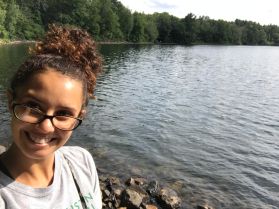 Hi! My name is Madison Probus. I am a part-time student in my second year of the Education Policy and Management Program. I work full-time as a staff assistant in the HGSE Dean’s Office and am going on my third year as an HGSE staff member. I graduated from the University of Texas at Austin in 2014, and worked for two years before moving to Cambridge. In Austin, I worked as the administrative projects coordinator for a non-profit providing wrap-around services for K-12 students. I call Houston, TX home and look forward to returning one day. But while in Cambridge, I’m exploring the free and discounted museums, hiking trails, and New England day trip destinations. My fiance and I have really come to enjoy the city. There are so many exciting opportunities at HGSE and in the Greater Boston area to discover new hobbies and engage in a community.

 HGSE Admissions Blog